Bolingbrook Garage Door Guide
When to Stop Repairing and Start Replacing
A guide for Bolingbrook homeowners on when a garage door repair still makes sense and when the 1960s-70s hardware and cold winters mean it's time to replace.
- Licensed & Insured
- Same-Area Service Calls
- Upfront Pricing
When It Stops Being a DIY Job
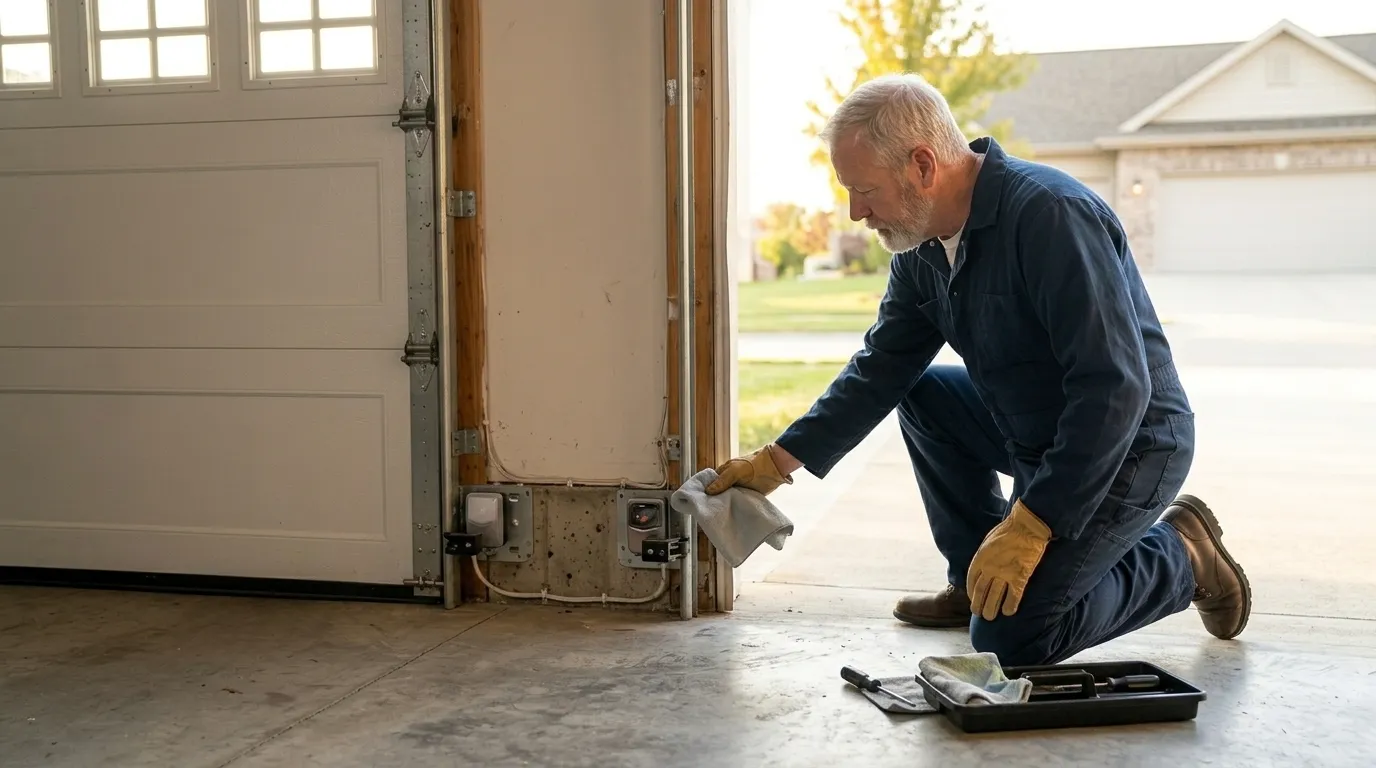
A frayed cable, a stuck sensor, a door that won't close all the way - those are calls we get every week, and plenty of them start as a homeowner trying to fix it themselves first. That's fine up to a point. Tightening a loose track bracket or swapping a remote battery costs you nothing but time.
The line moves once springs are involved. A torsion spring under tension can put someone in the ER, and on the doors we see most around here - installed anywhere from the late 1930s through the early 2000s, with the bulk of the stock dating to the 1960s and '70s - the spring and drum assemblies are often original or one replacement removed from original. That's decades of wear on hardware that wasn't built to today's cycle counts.
If the door is off its track, if a cable has jumped the drum, or if the opener is grinding but not lifting, stop there. Those jobs need the door secured and the tension released properly, and getting that wrong on an older torsion setup is how people get hurt. Call before you keep pulling on it.
The Problem
Most garage doors in Bolingbrook sit inside housing stock built between 1938 and 2004, with a median build year around 1976 and a heavy concentration of homes from the '60s and '70s. That matters because a door installed with a house from that era, even if it's had a panel or opener swapped since, is usually working with hardware sized and rated for a lighter, thinner door than what's sold today.
The result is a mismatch we see constantly: a homeowner replaces a worn opener with a stronger modern unit, but leaves the original springs and track from the 1970s underneath it. The new motor works the old parts harder, and something that was already near the end of its service life fails faster than it would have on its own.
The honest answer, and the one we'll give you on a call, is that repair only makes sense when the failing part is isolated and the rest of the system is sound. A snapped cable on an otherwise good door is a repair. A door with a 1970s track, a stripped gear opener, and a panel that's rusted through at the bottom is three separate failures wearing one skin, and patching each one as it breaks costs more over two years than replacing the unit once.
When Waiting Is Fine
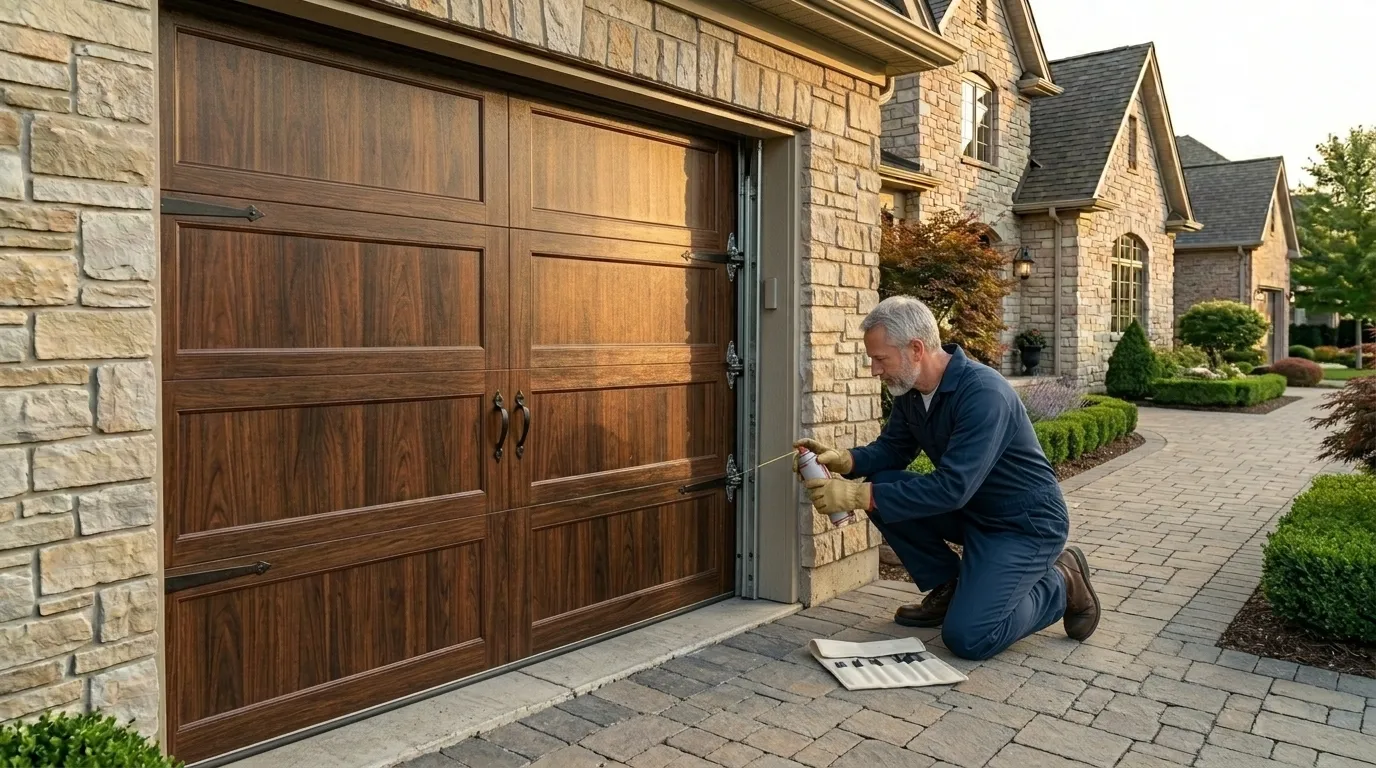
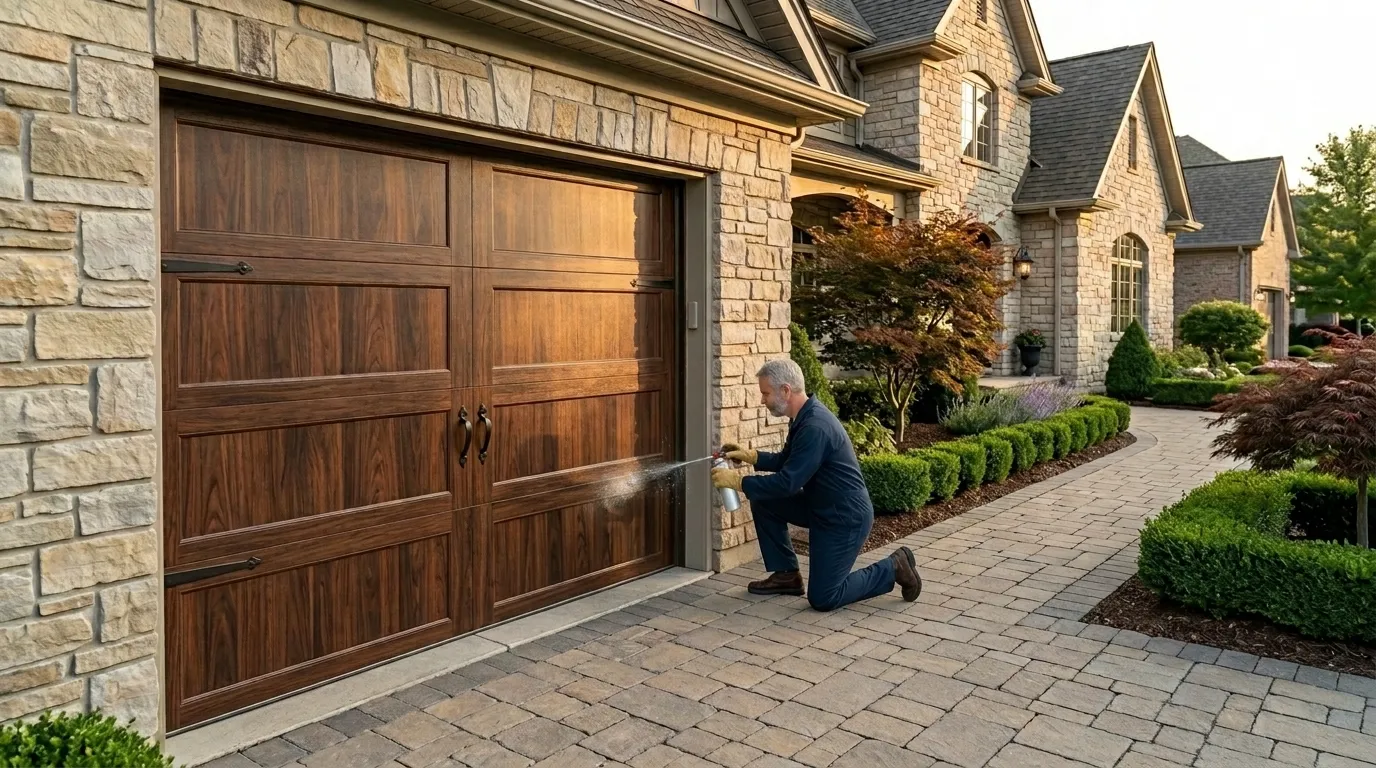
Not every noise or stiff spot means trouble. If a door is noisy but still opens and closes smoothly, tracks true, and reverses properly when it hits an obstruction, you can usually wait and just get it lubricated and adjusted at a normal service visit rather than treating it as an emergency.
A door that's slow to respond to the remote but works fine on the wall switch is often a battery or sensor alignment issue, not a structural one - that's a fix, not a replacement decision. Same with cosmetic dents or fading on a panel that otherwise seals and balances correctly; there's no mechanical reason to replace a door just because it looks its age.
The honest limitation here: we can't tell you over the phone whether your specific door is a wait-and-see or a stop-now situation. Balance, spring condition, and track wear all need a hands-on look. If in doubt, get it checked rather than guessing, but don't assume every squeak means the door is failing.
How Local Conditions Play In
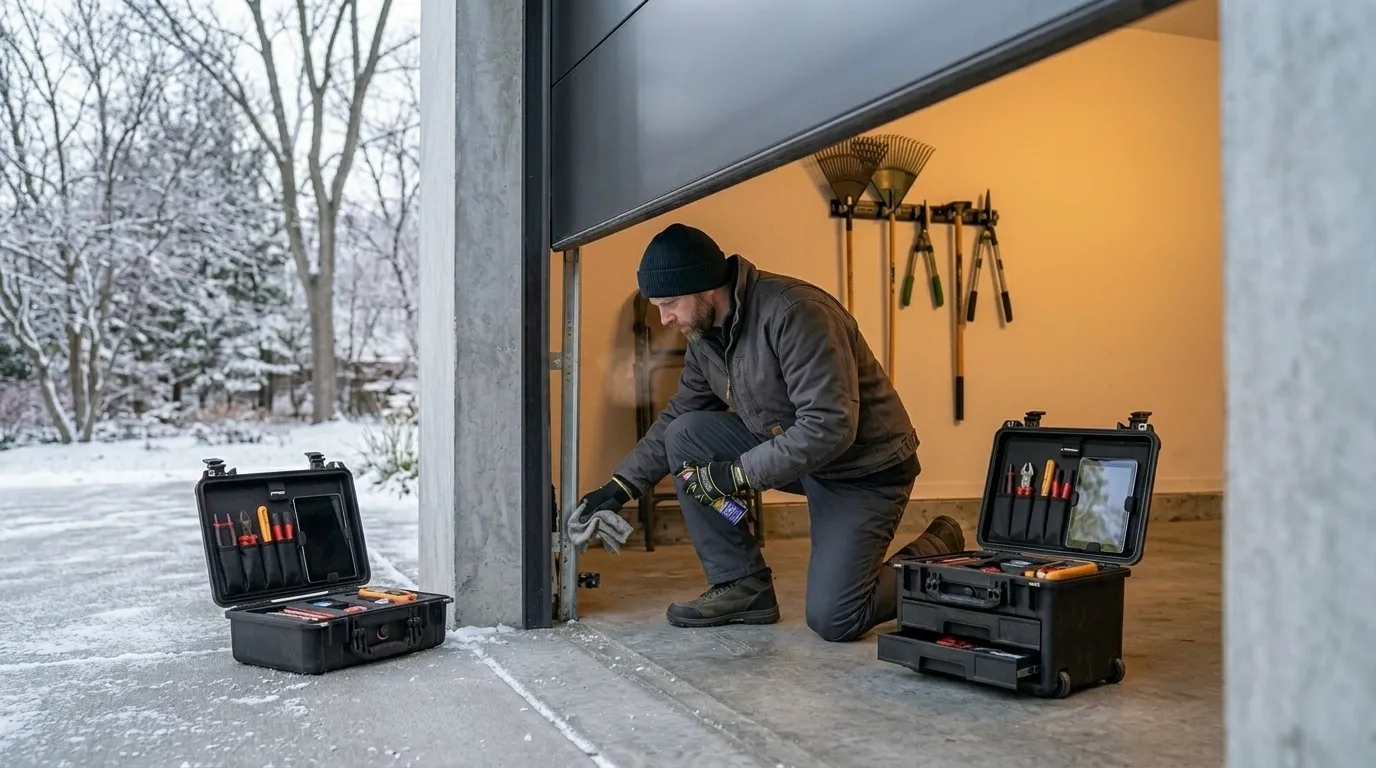
Bolingbrook sits in a cold, moderate climate band, and that has a real effect on how long garage door hardware lasts here. Steel springs and cables contract in winter cold, which increases tension and stress on parts that are already decades old in much of the local housing stock. That's a big part of why winter is when we see the most spring failures - not because the door is used more, but because the metal is working under different conditions than it was in summer.
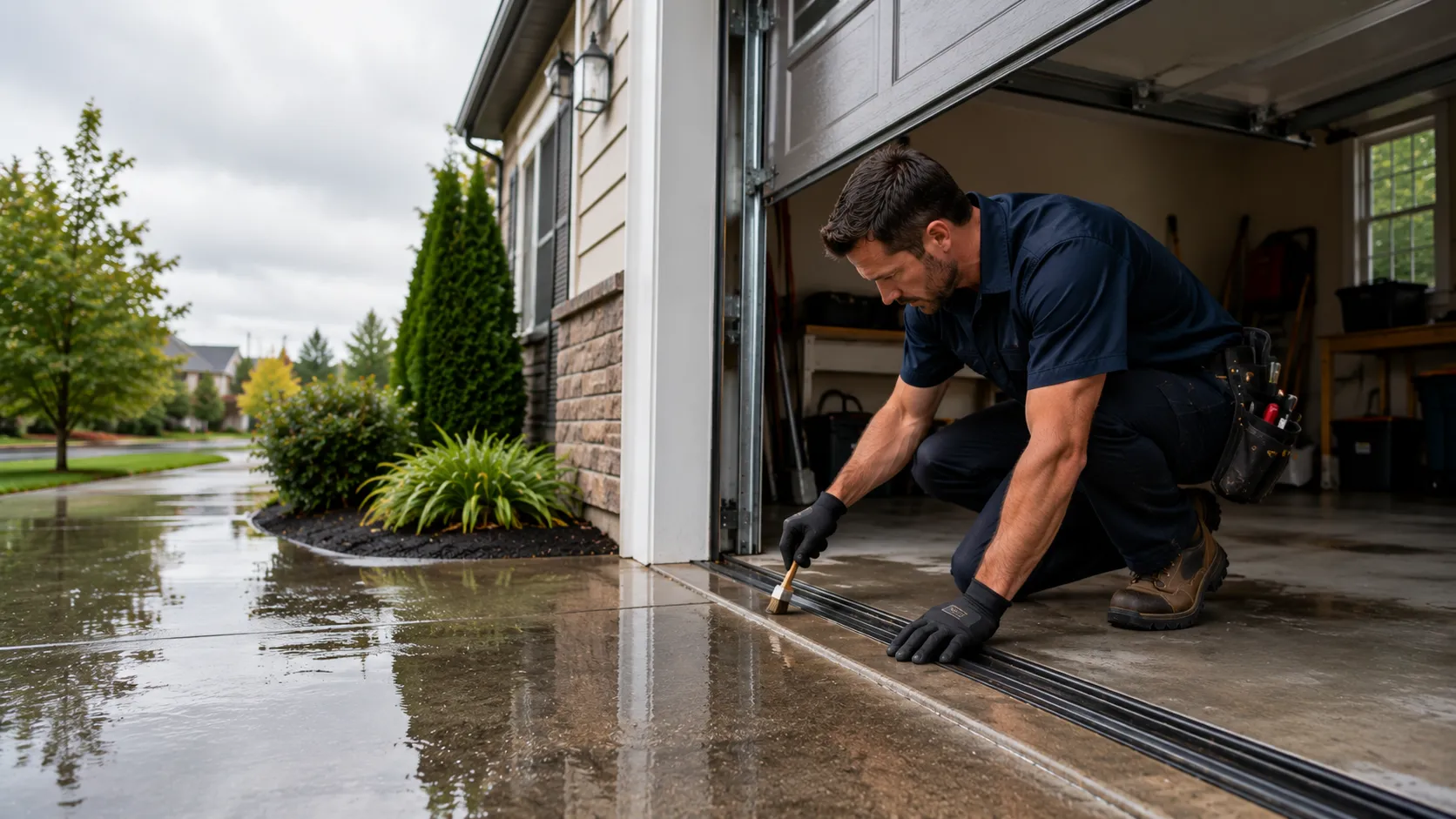
Weatherstripping is the other piece. On homes built in the 1960s and '70s, original bottom seals and door thresholds were rarely designed for the wide temperature swings we get through a full year here, and a gap that lets in a cold draft is often the first visible sign that a door needs attention before something bigger fails.
If your door has been fine for years and suddenly starts sticking or binding once the temperature drops, that's the cold exposing a weak point that was already there, not a new problem showing up out of nowhere. That's usually the moment to have it looked at rather than waiting for spring.
How We Can Help
Garage Door Repair
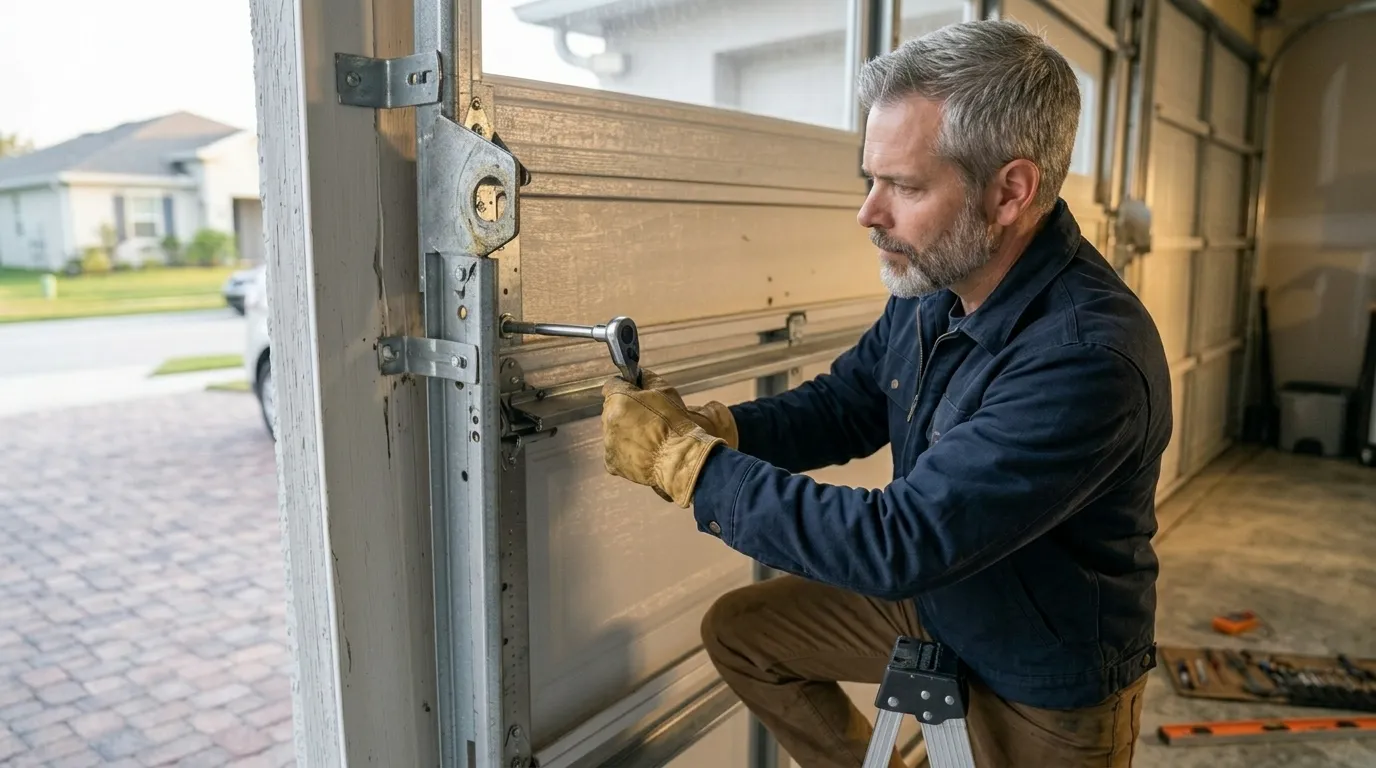
Springs, cables, tracks, rollers, and openers fixed by a tech who explains the problem before touching anything.
Learn more →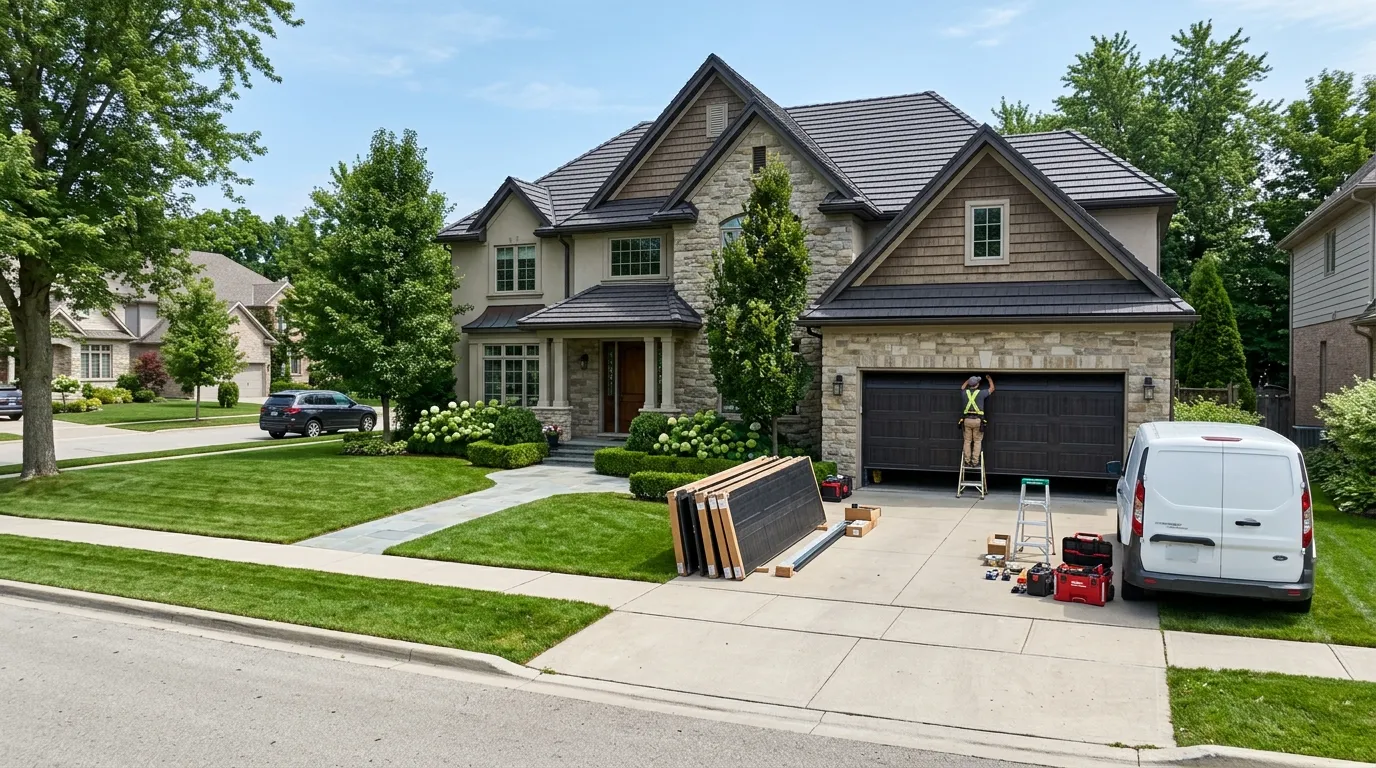
Garage Door Installation
New sectional doors sized and installed for the housing stock actually built in this area.
Learn more →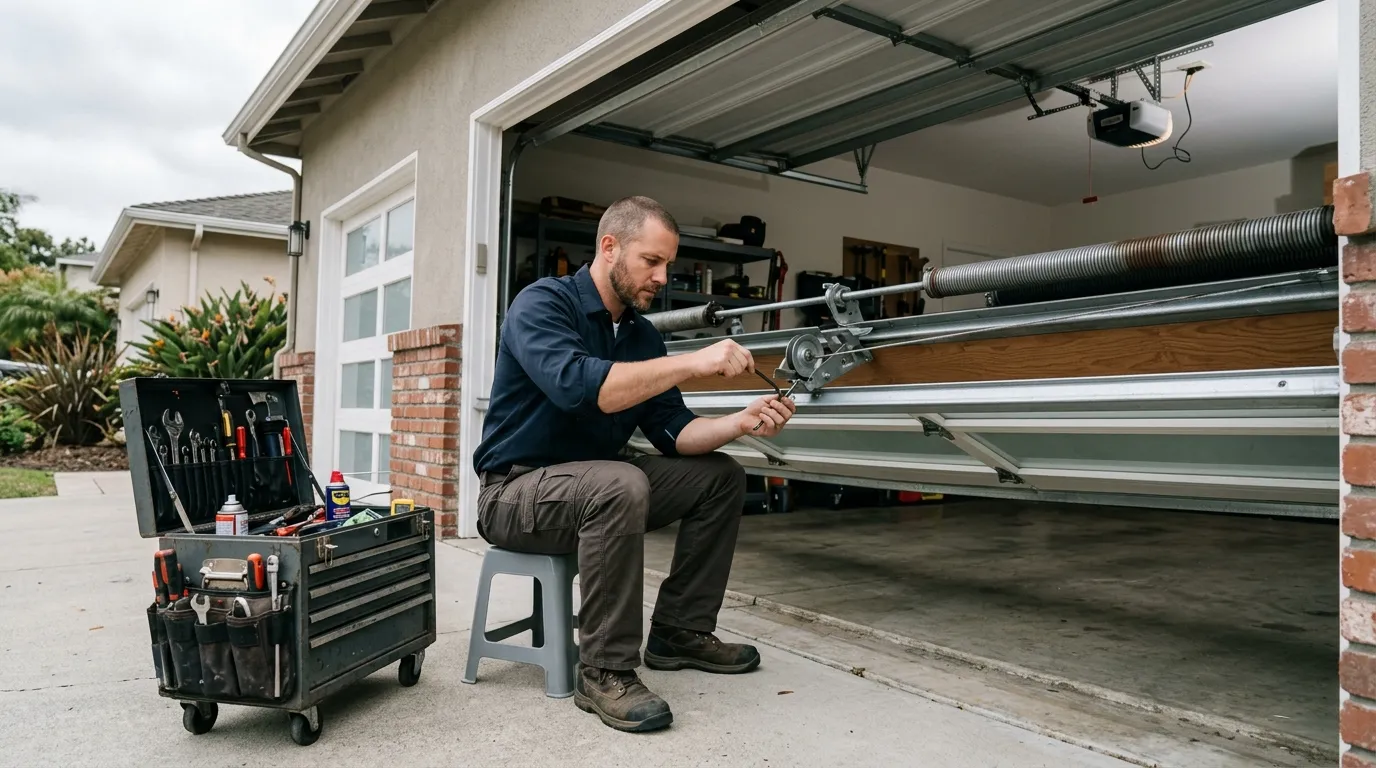
Garage Door Service
Tune-ups, lubrication, and safety checks that catch a small problem before it becomes a service call.
Learn more →Frequently Asked Questions
Is it worth repairing a garage door on a house built in the 1960s or '70s?
Often yes, if the failure is isolated - a broken spring or a bad opener on an otherwise straight, balanced door. The issue is when the track, springs, and panel are all original and all near the end of their life at once. At that point, repairing one part just moves the next failure a few months down the road.
Why does my garage door act up more in winter here?
Bolingbrook sits in a cold climate band, and steel springs and cables tighten up under cold, adding stress to hardware that in a lot of local homes is already decades old. Winter doesn't cause the wear, it exposes it - which is why spring failures cluster in the colder months.
Can I just replace the opener and leave the old track and springs?
You can, but on houses from the 1960s-70s era common here, the original track and spring hardware often wasn't built for the cycle count of a newer, stronger opener. Pairing a new motor with old hardware tends to shorten the life of both. We'll tell you honestly if that's what's happening on your door.
Have a Door That Needs a Second Opinion?
Call and describe what it is doing - we will tell you what it likely is.