Bolingbrook Garage Door Guide
Garage Door Repair in Bolingbrook: What You Can Fix and What You Can't
Bolingbrook homes built mostly in the 1960s-70s bring specific spring and track wear. Here's what a homeowner can fix, what to leave alone, and why cold winters change the math.
- Licensed & Insured
- Same-Area Service Calls
- Upfront Pricing
When It Stops Being a DIY Job
A lot of Bolingbrook garages sit on houses built between 1938 and 2004, with the bulk of that stock going up in the 1960s and 70s. That matters because a torsion spring job on a door from that era usually means dealing with original hardware - smaller shafts, older drums, and mounting brackets that weren't built to today's spec. Swapping a broken extension spring on a lightweight aluminum door is a job some owners can handle with the right clamps and a afternoon.
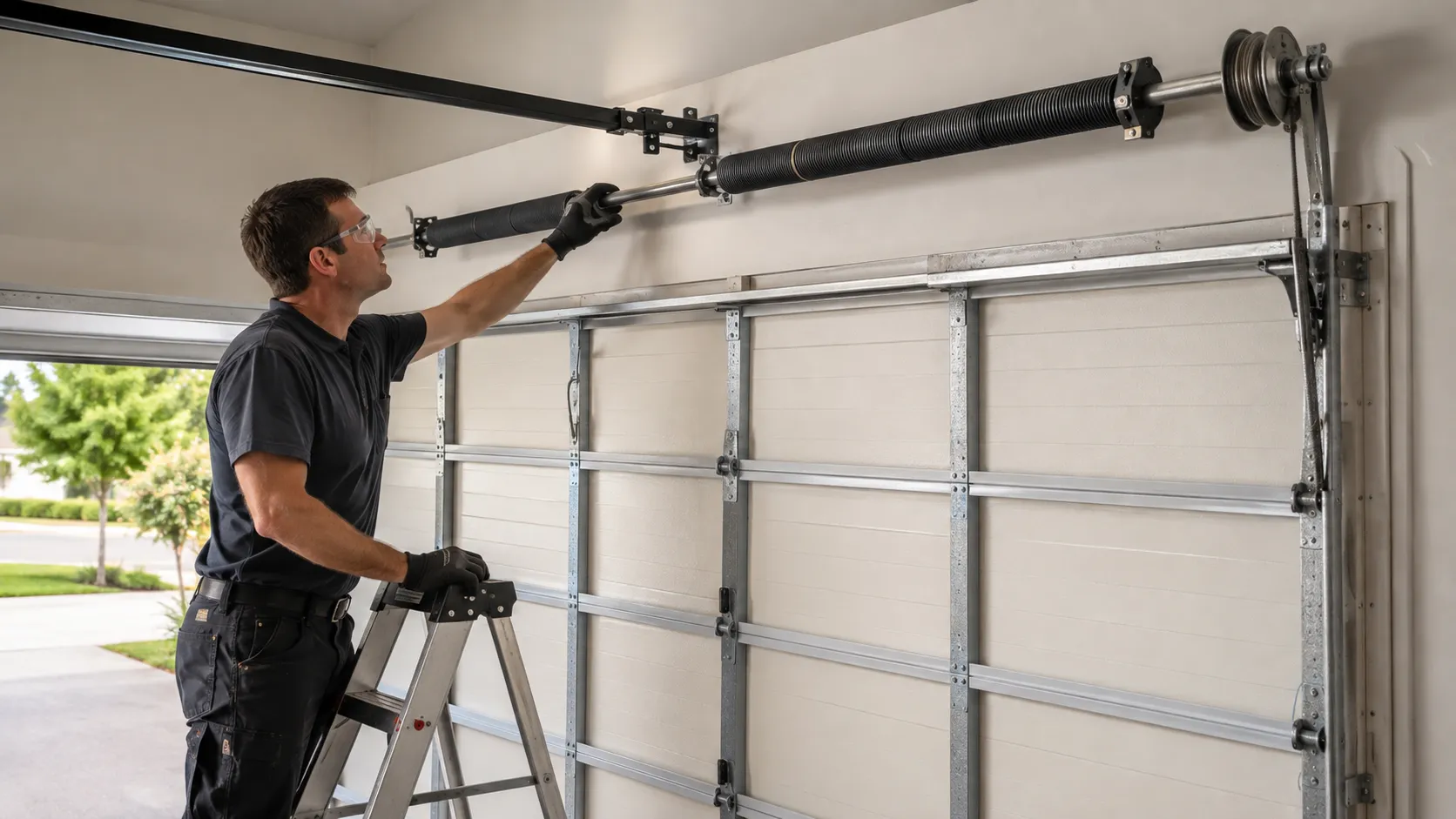
A torsion spring under load on a heavier steel door from a 1970s build is not. The spring is wound tight enough to break a wrist or worse if it slips off a winding bar.
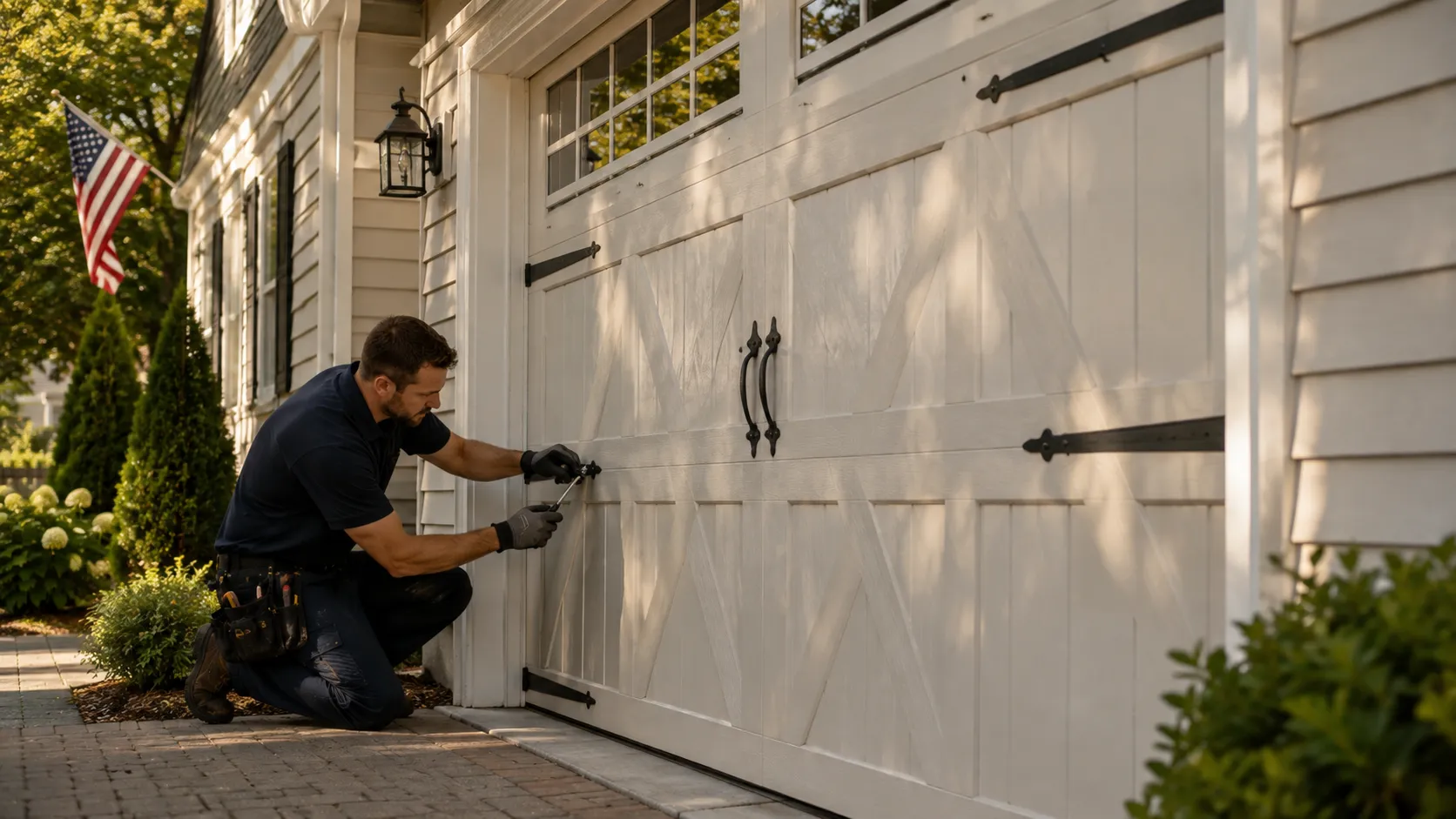
Same goes for cable replacement. If a cable has frayed but hasn't snapped, you can sometimes get away with tightening a loose track bracket yourself. Once a cable's core wires are showing, or a roller has jumped the track and bent it, that's a call, not a Saturday project.
The door is 150-400 pounds of moving weight over your car and your kids' bikes. We won't talk you through winding a spring over the phone, and if a shop offers to, that's worth being suspicious of.
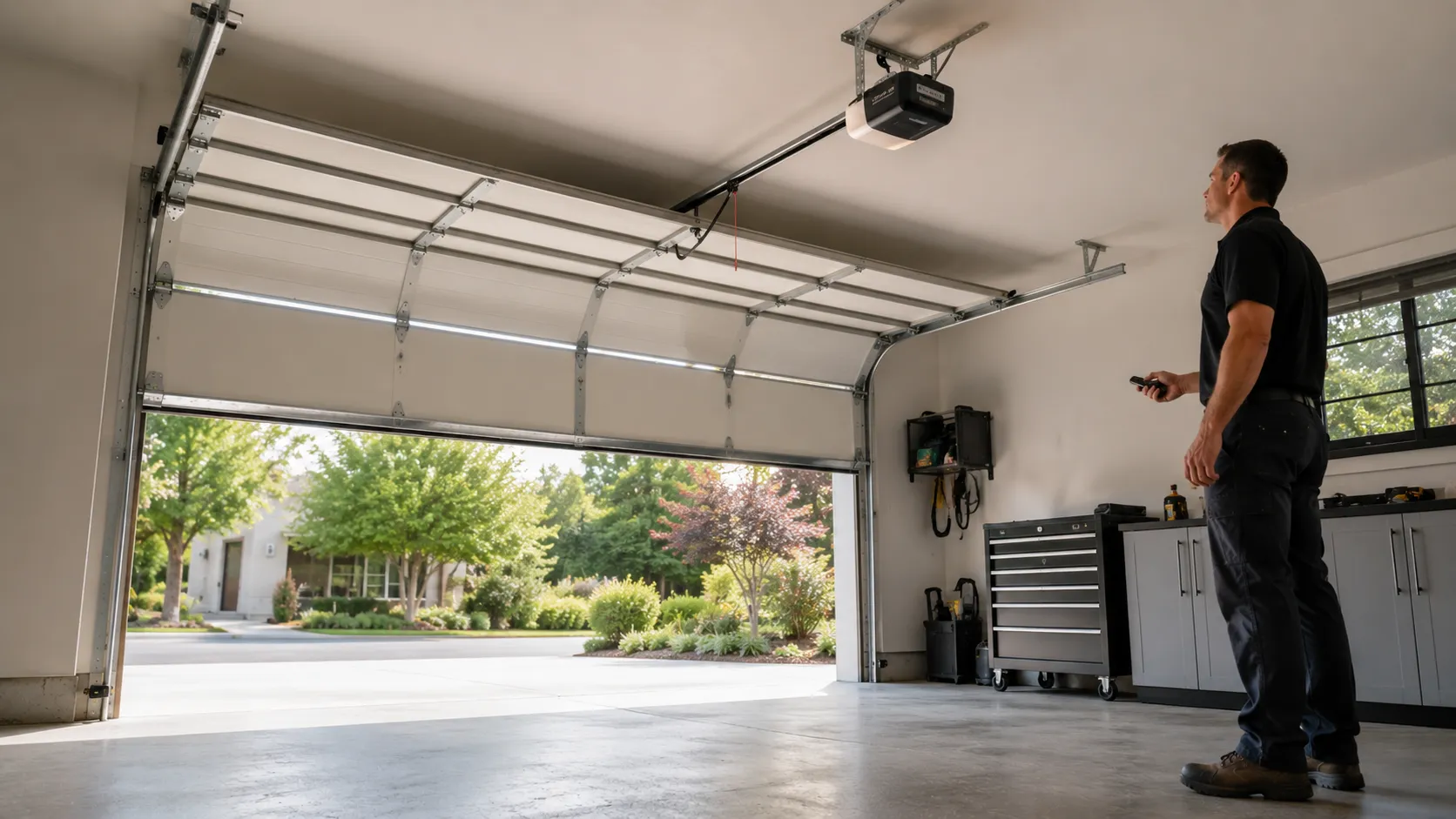
What you can do without a truck showing up: lubricate hinges and rollers, tighten loose bolts on the track, replace weather seals and draughts around the bottom panel, and check that the photo-eye sensors are aligned. Those are maintenance, not repair, and they're the kind of thing that keeps a 1970s-era door running another decade.
The Problem
Most of the doors we get called on in Bolingbrook aren't failing because the door itself is bad - they're failing because the hardware underneath was sized and installed for a house built decades ago, and it's been carrying that same spring, same cable, same opener bracket since. With median build year around 1976 across this side of town, a lot of that original hardware is well past its expected cycle count. Springs are rated for a number of open-close cycles, not years, but 45+ years of daily use adds up fast regardless of the rating.
The second issue is that owners often don't know their door's spring wire gauge or drum size has never been swapped since the original install. When a spring finally goes, using a generic replacement instead of matching the original spec can throw off the balance of the whole door, which then stresses the opener motor and the tracks. That's a slower, quieter failure that shows up as a door that struggles to lift, not a dramatic snap.
We don't push replacement over repair just because a door is old. If the track, opener, and panels are sound, a spring and cable swap on a 1970s door is often the right call and the cheaper one. Full replacement makes sense when the panels themselves are rusted through or the track is bent beyond straightening - not just because the door has some age on it.
When Waiting Is Fine
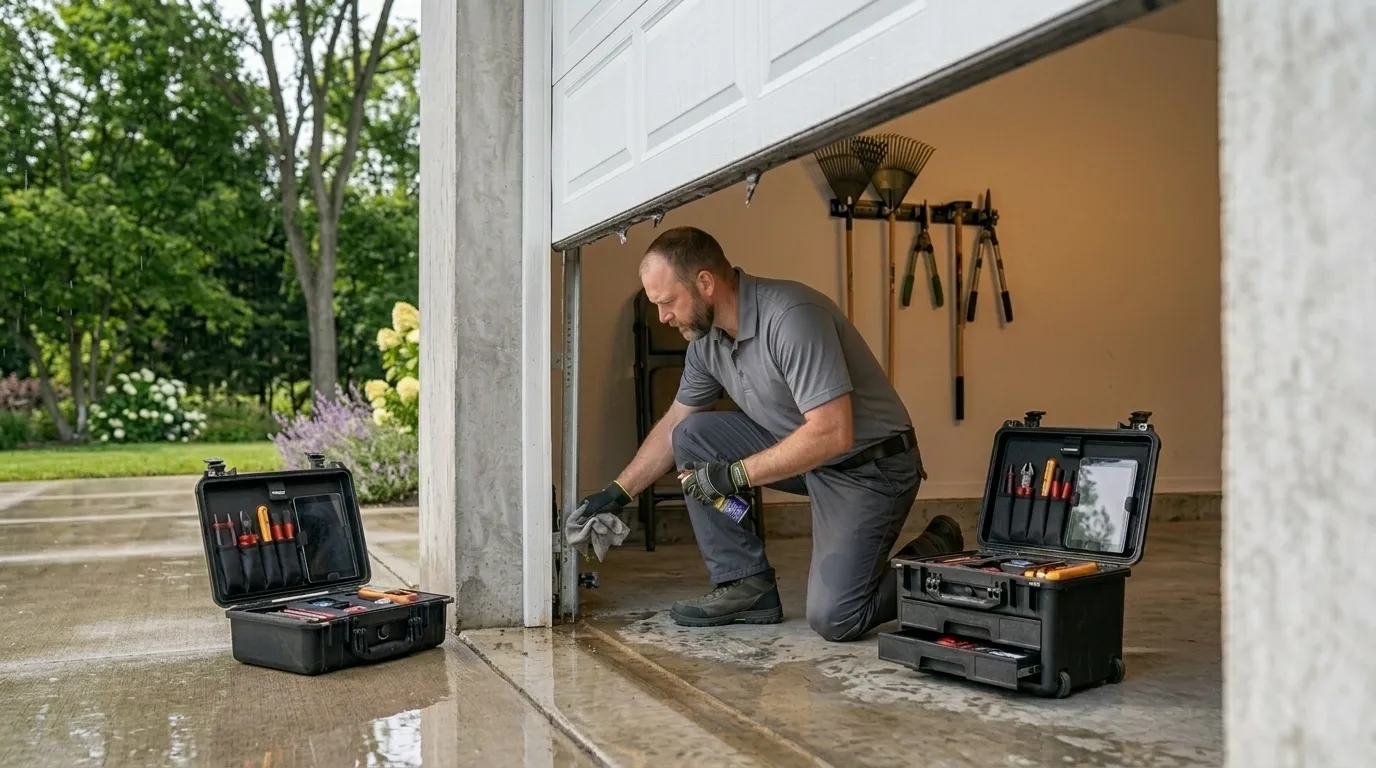
Not every squeak or shudder means the door is about to fail. A door that's noisy on the way up but still balances and moves smoothly is usually a lubrication problem, not a spring or cable problem, and it can wait for a routine visit rather than an emergency call. Same with a slightly slow-closing door in cold weather - in this climate band, metal contracts and grease thickens, so a door that takes an extra second or two to seat in January isn't necessarily broken.
If your opener is original to a 1980s or 90s install and still runs, there's no reason to replace it just because it's older technology. We don't sell a new opener on a door that's working fine. The honest limitation here: we don't stock every replacement part for every era of hardware on the shelf, so if you've got an unusual spring size or an older opener model, expect us to quote a lead time rather than a same-day fix.
A door that sticks only in the coldest weeks, or that needs an extra nudge on the remote but responds fine on the wall button, is worth monitoring rather than rushing. Write down when it happens and how often - that pattern tells us more on a service call than a description over the phone, and it can be the difference between a $20 seal replacement and a bigger job.
How Local Conditions Play In
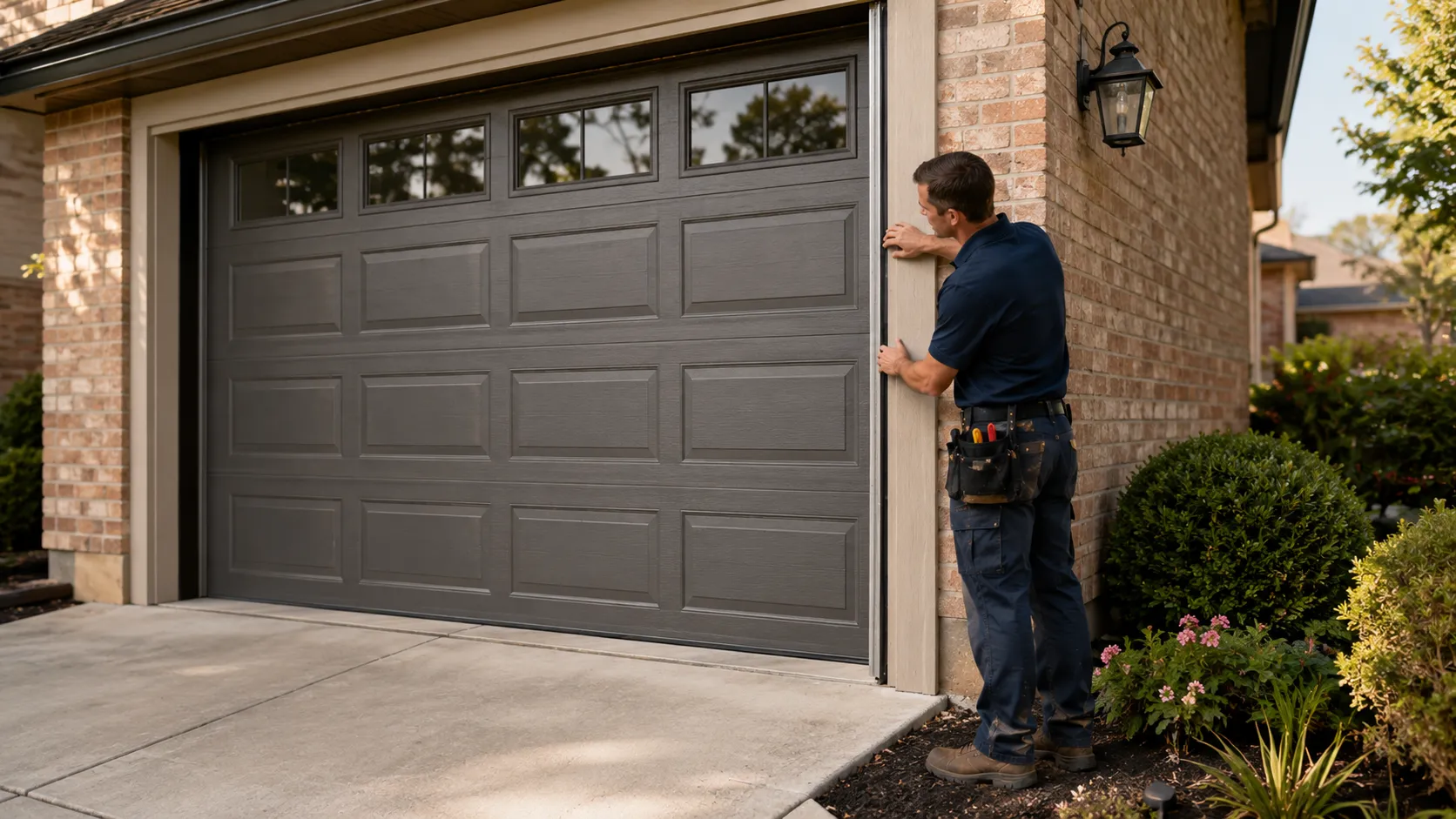
Bolingbrook sits in a cold, moderate climate band, and that shows up in garage doors in a specific way: metal springs and tracks contract in winter, grease stiffens, and worn weather seals let cold air and moisture into the garage itself, which then affects anything else stored there. On older doors - and with median construction year at 1976, a lot of Bolingbrook doors qualify - the bottom seal is usually the first thing to go, letting in draughts that make the whole garage colder than it should be.
Condensation is the quieter problem. When warm air from an attached garage meets a cold steel door panel, moisture collects on the inside, and over enough winters that can rust out the bottom of a panel or corrode a track bracket faster than the door's age alone would suggest. That's part of why a door that looks fine on the outside sometimes has a rusted-through bottom panel edge when we open it up.
We check weather seals and draughts on every winter service call for exactly this reason - it's a small part with an outsized effect on how the rest of the door holds up through a Bolingbrook winter. If you're noticing a cold garage or ice buildup at the base of the door, that's usually the seal, not the opener.
How We Can Help
Garage Door Repair
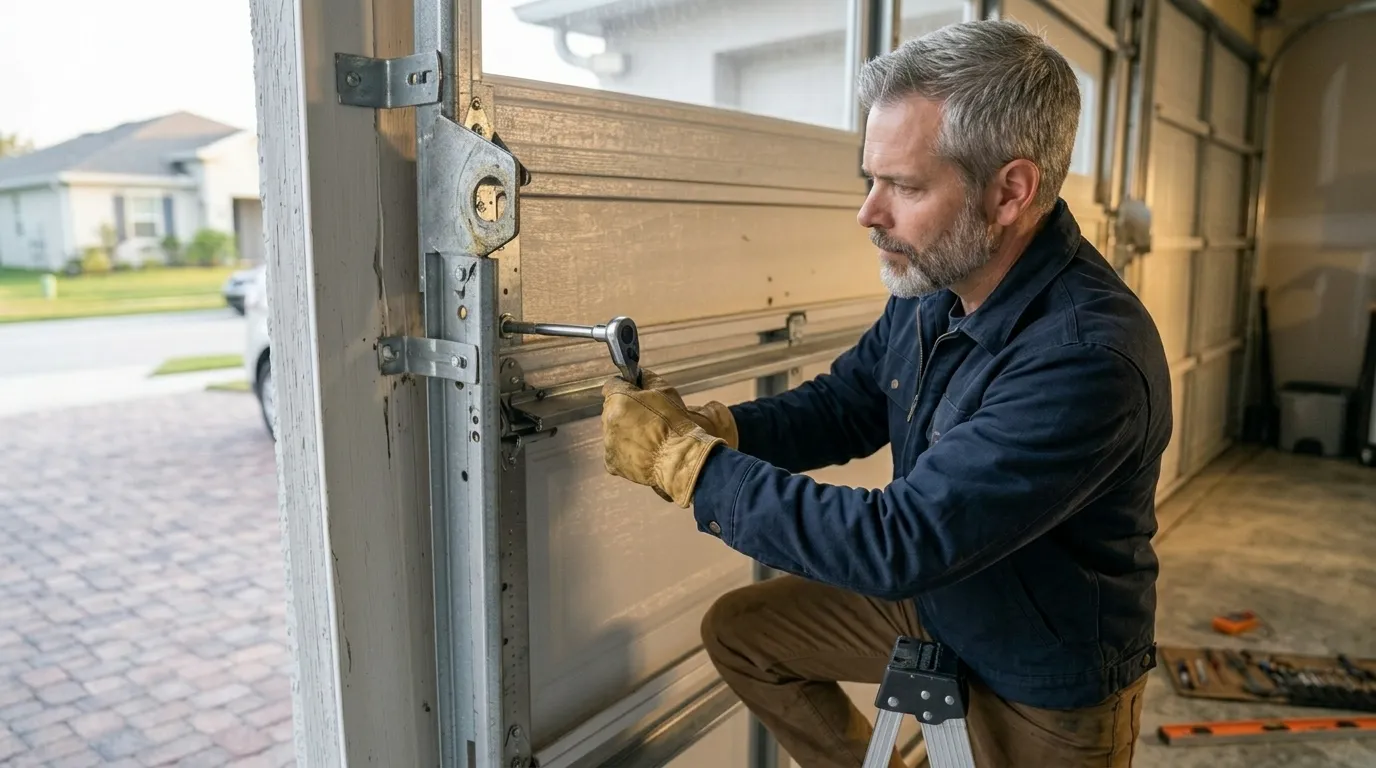
Springs, cables, tracks, rollers, and openers fixed by a tech who explains the problem before touching anything.
Learn more →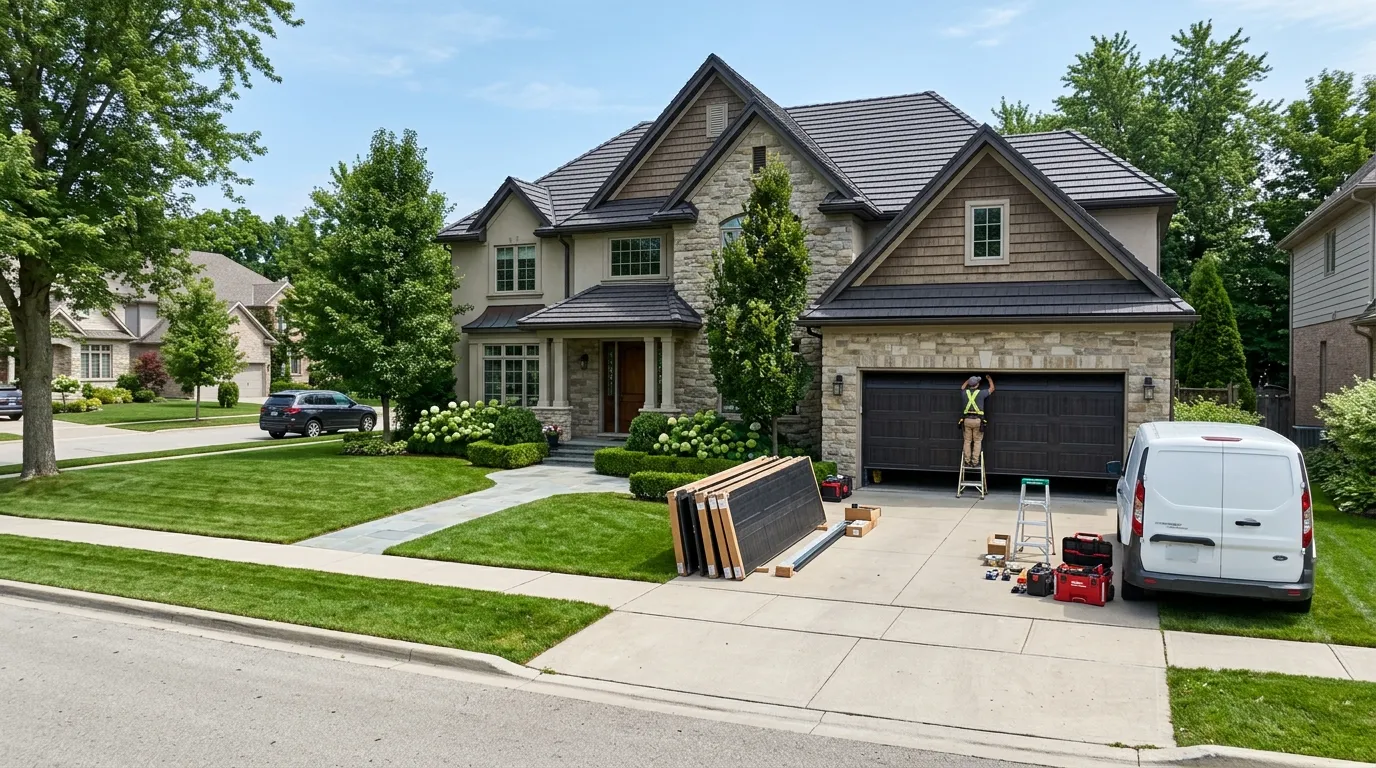
Garage Door Installation
New sectional doors sized and installed for the housing stock actually built in this area.
Learn more →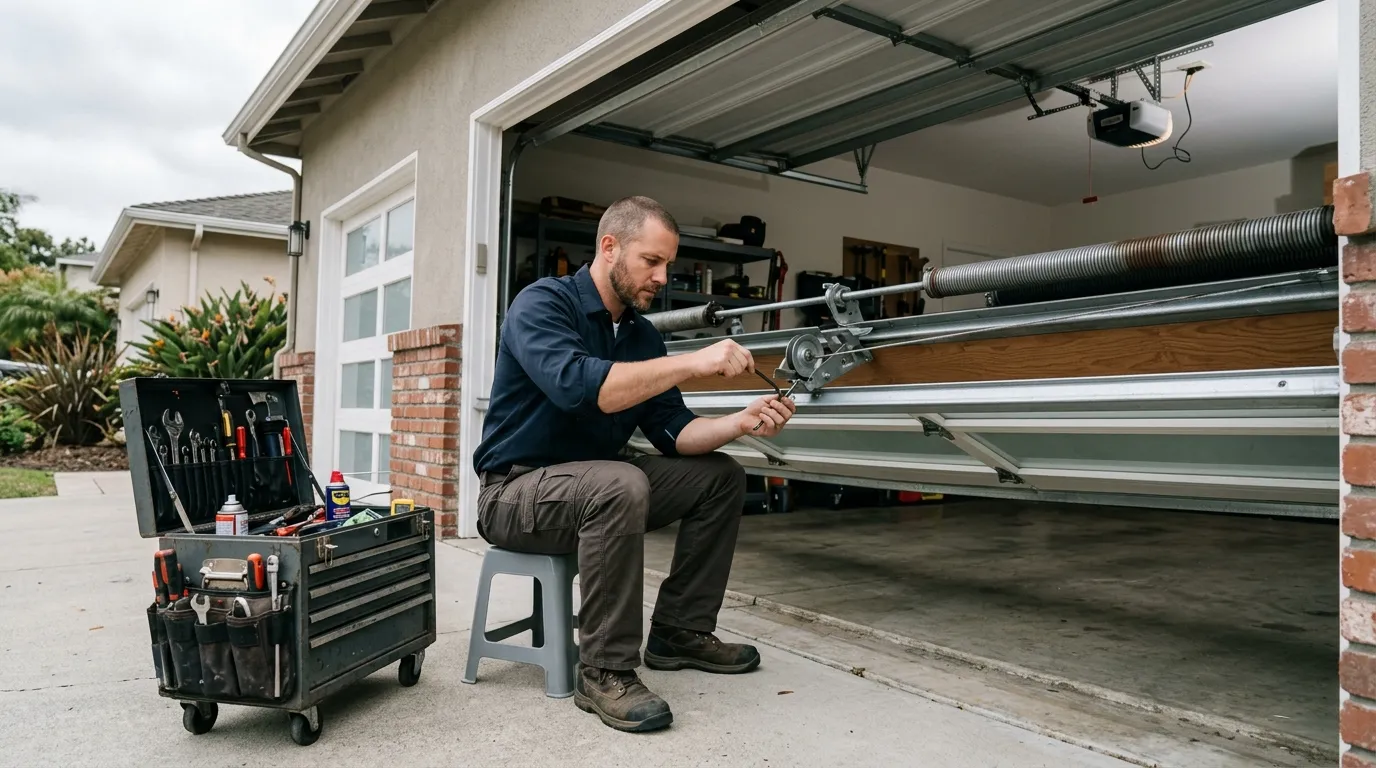
Garage Door Service
Tune-ups, lubrication, and safety checks that catch a small problem before it becomes a service call.
Learn more →Frequently Asked Questions
Is my garage door spring original to the house?
If your Bolingbrook house was built in the 1960s or 70s, which covers a large share of the area's stock, and the spring has never been replaced, it's likely original or close to it. Decades of daily cycles wear springs out regardless of how they look. If you don't know the install date, we can check the spring's wind and wire gauge on a visit.
Can I replace a torsion spring myself?
We'd rather you didn't. A torsion spring on a standard door is wound under enough tension to cause serious injury if it releases while you're working on it. Extension springs and weather seals are more forgiving DIY jobs. Anything involving winding bars and a torsion tube is worth a call.
Why does my door seem slower in winter?
Cold, moderate winters here thicken grease and contract metal slightly, so doors can lift and close a bit slower in January than in July. That's normal within a couple seconds of difference. A door that's dramatically slower or grinding is a separate issue and worth a look.
Do you replace opener motors that still work?
No. If your opener is running and lifting the door without straining, we don't recommend swapping it just for age. We'll tell you if the motor's straining because of a balance issue elsewhere in the door rather than push a replacement it doesn't need.
Have a Door That Needs a Second Opinion?
Call and describe what it is doing - we will tell you what it likely is.