Bolingbrook Garage Door Guide
Garage Door Repair in Bolingbrook: Know Before You Grab the Wrench
A look at when a Bolingbrook garage door problem is a real DIY job and when it isn't, based on the age of local housing stock and the area's cold winters.
- Licensed & Insured
- Same-Area Service Calls
- Upfront Pricing
When It Stops Being a DIY Job
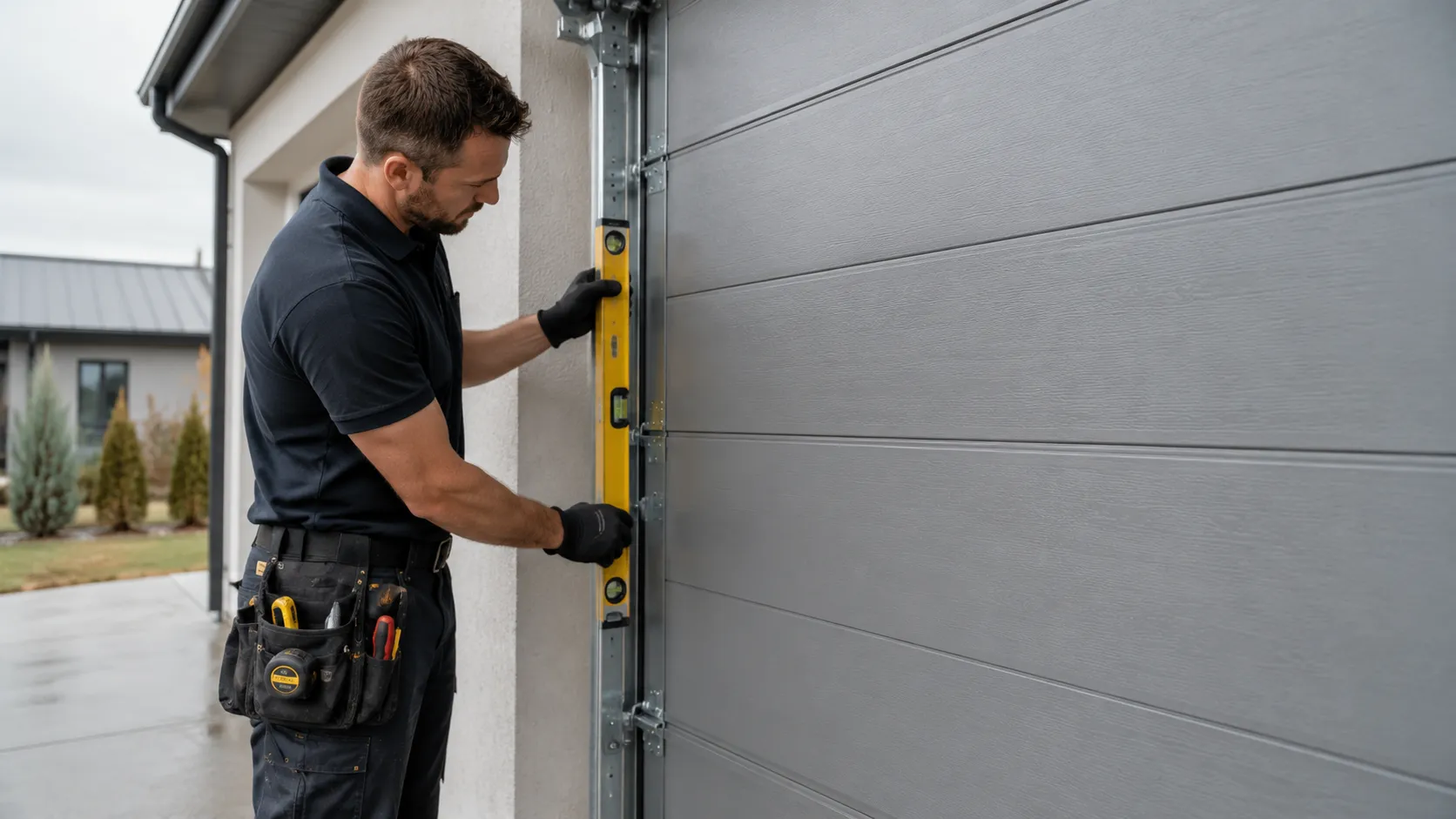
Most houses in Bolingbrook went up between the late 1960s and the 1990s, with the bulk of the stock dating to the 1970s. That matters because a lot of these doors are on their second or third opener but still running the original torsion spring and track hardware from the build date. If your door is a builder-grade single-layer steel panel from that era, tightening a bracket or swapping a roller is a fair weekend job.
Where it stops being DIY: any time you're touching the torsion spring itself, the cable under tension, or a bent track on a door that's 30-plus years old and already worn at the hinges. Springs on doors this old were sized for the original door weight, and metal fatigue doesn't announce itself before it snaps. If the door came with the house and nobody's touched the spring since, that's not a tightening job, that's a call.
Doors on houses built before insulation rules are also often single-skin steel, which means the whole panel flexes differently under a DIY fix than a modern insulated door does - what looks like a simple bent-track repair can twist the frame instead of fixing it. Know the difference between adjusting hardware and replacing tensioned parts, and you'll know when to stop.
The Problem
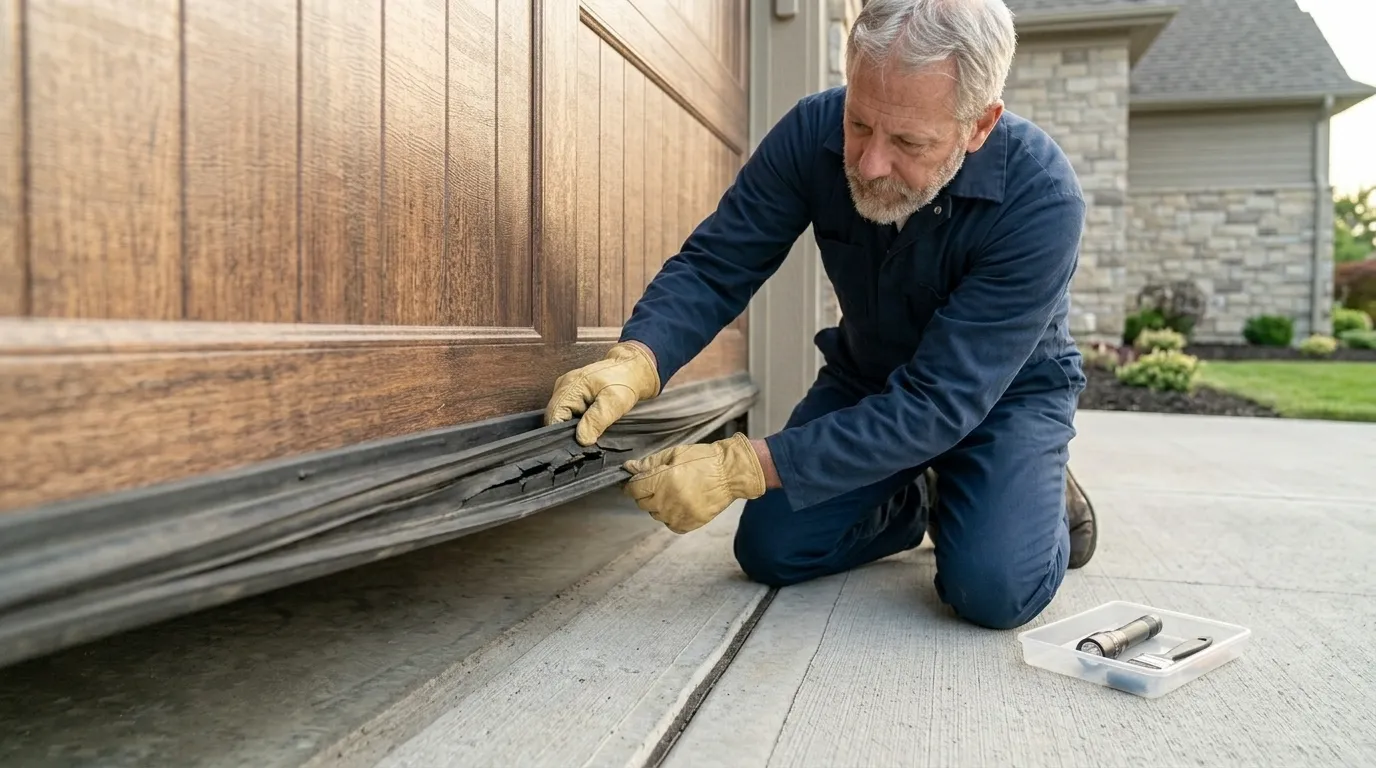
The housing stock here spans 1938 to 2004, median build year 1976, which means the town is full of doors and openers from at least three distinct eras all mixed on the same block. A house built in the 1970s might have had its door swapped once in the 1990s and the opener replaced again in the 2010s - three sets of hardware, three sets of assumptions about what parts fit. The common failure we see tied to this age spread isn't glamorous: worn rollers and hardened, cracked weatherstripping on doors that have never been replaced, paired with springs rated for a lighter door than what's currently hanging on them if a panel was ever swapped.
On a 1970s-built house, a heavier replacement door on old spring hardware is a mismatch that shows up as slow opening, a door that won't stay up on its own, or an opener straining and burning out early. It's not one big problem, it's a slow mismatch between eras of hardware that nobody planned for at the same time.
When Waiting Is Fine
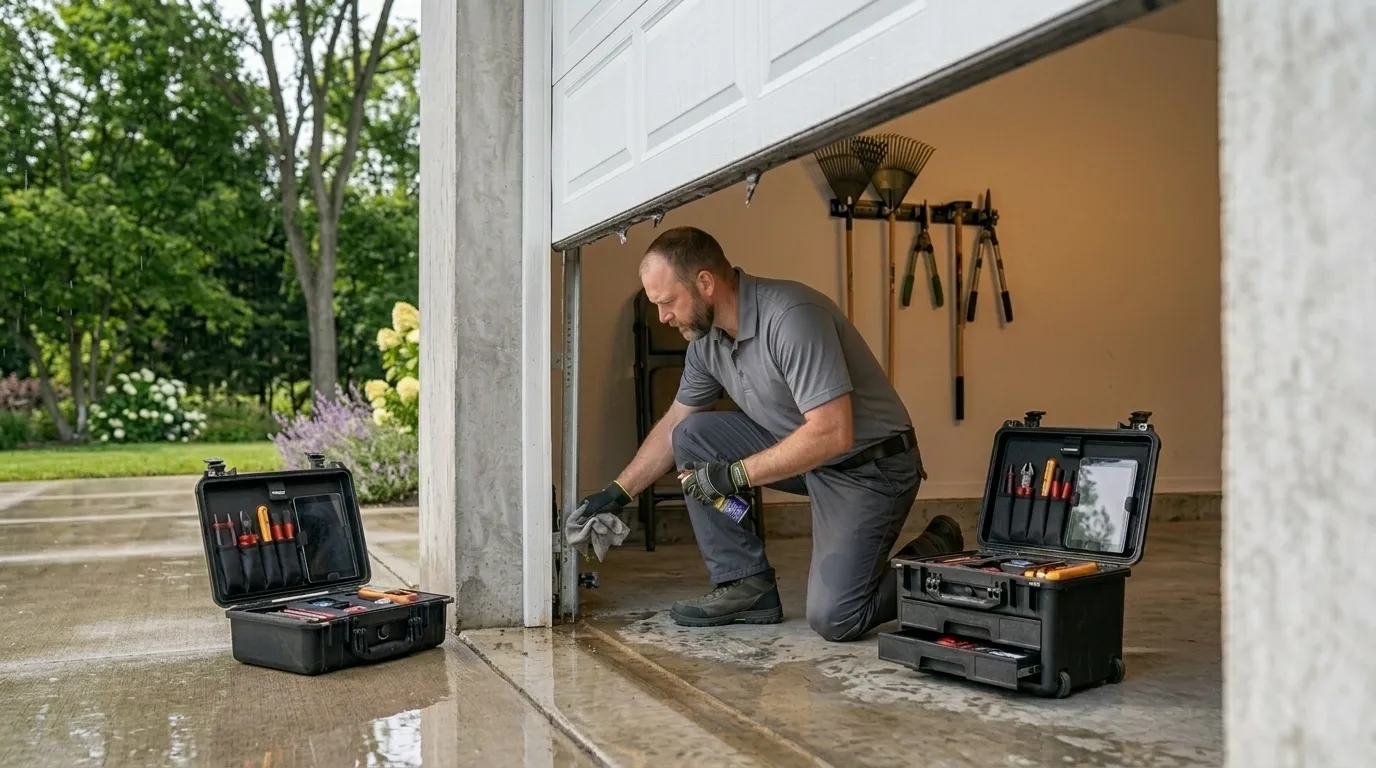
Not every squeak needs a same-day call. A door that's noisy but still opens and closes level, on a house from the common 1960s-70s stock in this area, usually just needs lubrication and a roller check - that can wait for a scheduled visit rather than an emergency one. Cosmetic dents, faded paint, or a slightly slow opener that still fully opens and closes are all fine to sit on.
Where we'd tell you to wait: minor cosmetic issues on a door that otherwise functions, since the moving parts under stress are the ones that turn into a stranded car or a dropped door, not the parts that just look tired. Where we wouldn't: a spring that's visibly gapped or a cable that's frayed, regardless of the calendar. One honest limitation - we can't tell you over the phone whether your specific noise is a $20 fix or a spring job.
If you're not sure, a quick diagnostic visit costs less than guessing wrong and damaging the opener trying to force a stuck door.
How Local Conditions Play In
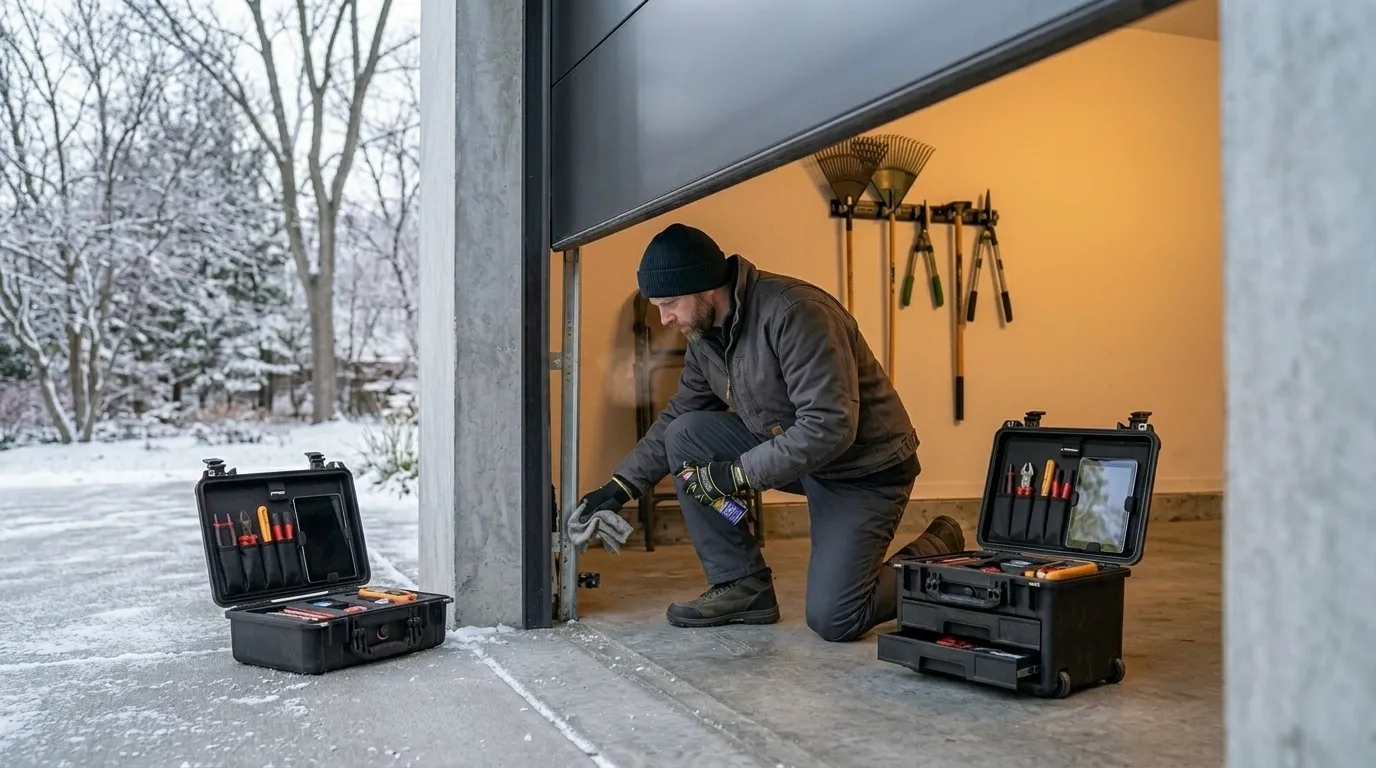
This area sits in a cold, moderate climate band, and that shows up in specific ways on garage doors rather than as a vague seasonal comment. Cold snaps stiffen the lubricant in springs and rollers, so a door that operated fine in October can start dragging or binding once temperatures drop - that's a lubrication and hardware check, not necessarily a broken part. Metal contracts in the cold too, which is why a door that was aligned fine in summer can start catching on the track in winter; the fix is usually a track adjustment, not a new door.
On older, single-layer steel doors common on houses built before insulation rules were standard, cold air moves straight through the panel, so the garage itself runs colder than an insulated door would allow, which matters if the garage shares a wall with living space. None of this is dramatic, but it's the reason a service call in January can turn up a different issue than the same door would show in July.
How We Can Help
Garage Door Repair
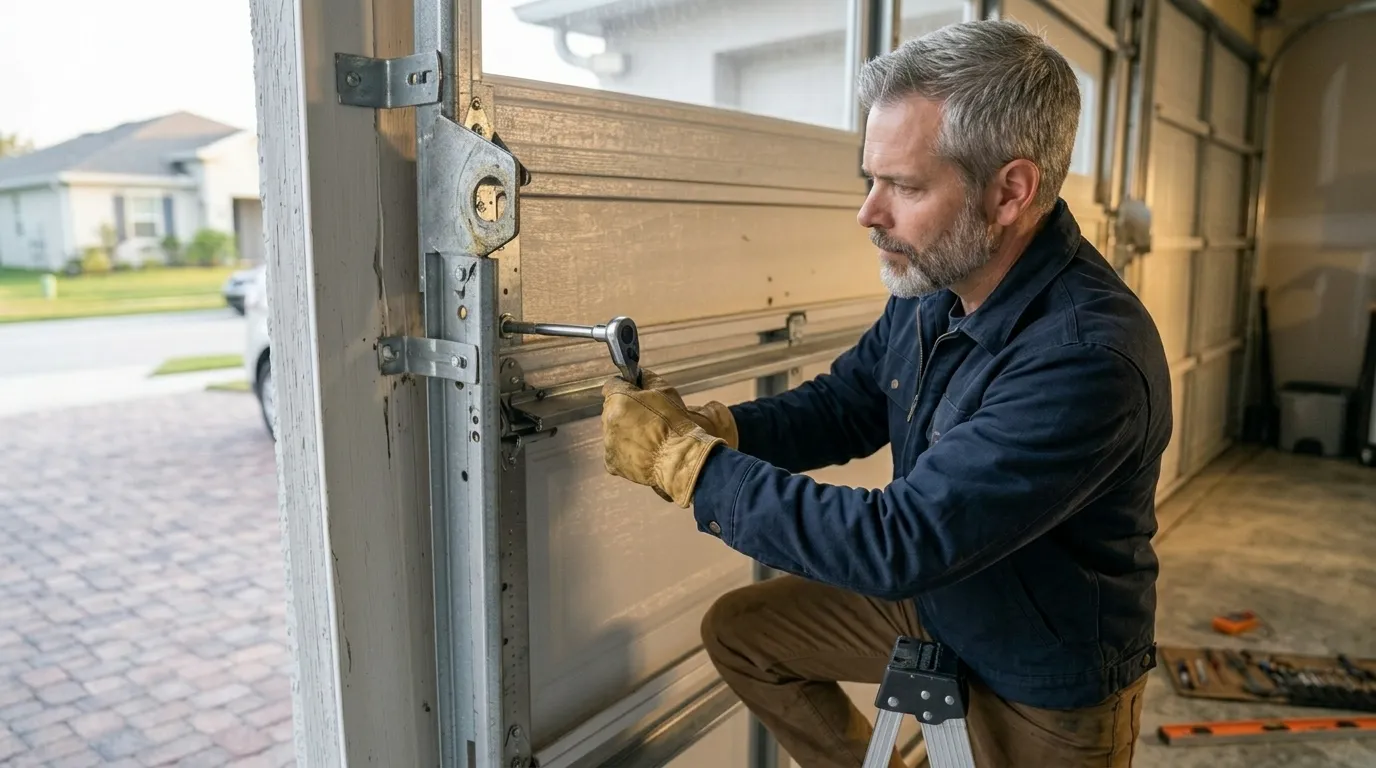
Springs, cables, tracks, rollers, and openers fixed by a tech who explains the problem before touching anything.
Learn more →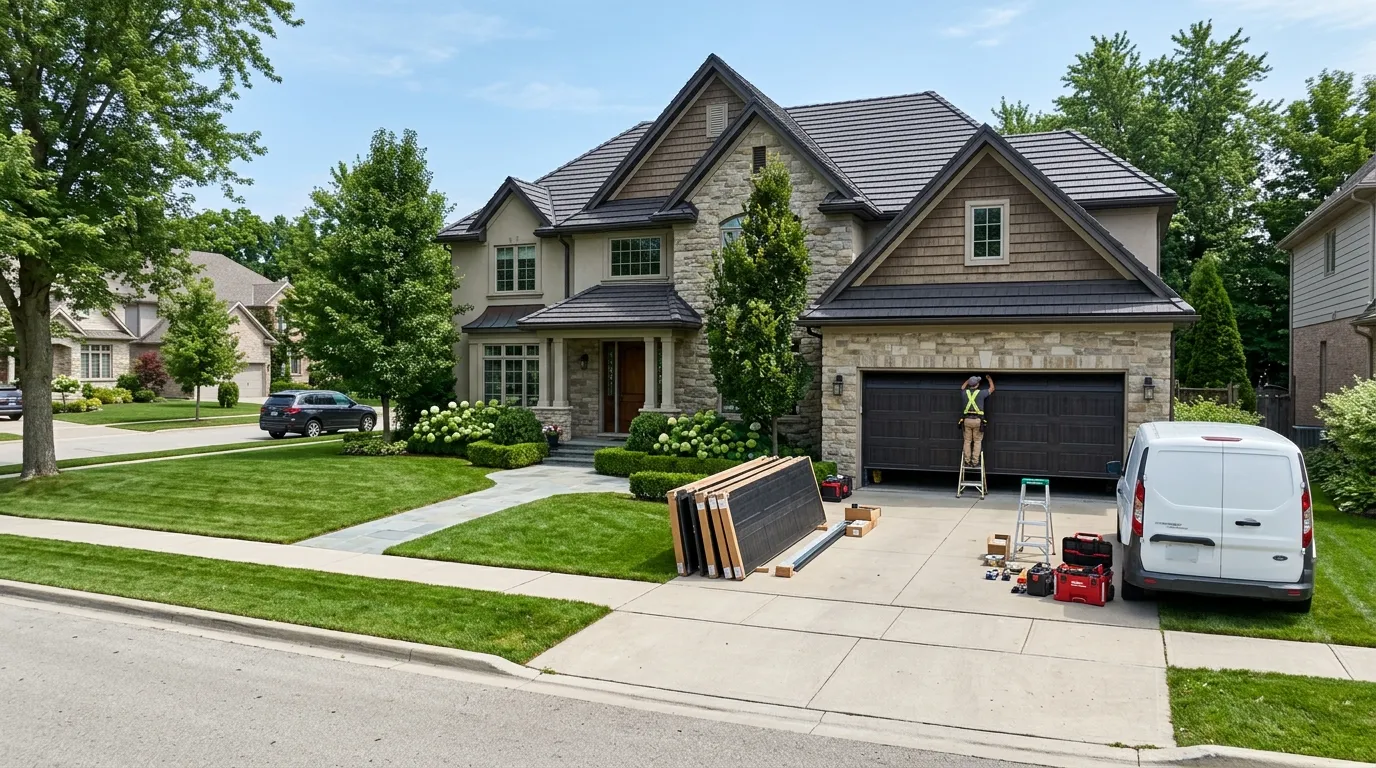
Garage Door Installation
New sectional doors sized and installed for the housing stock actually built in this area.
Learn more →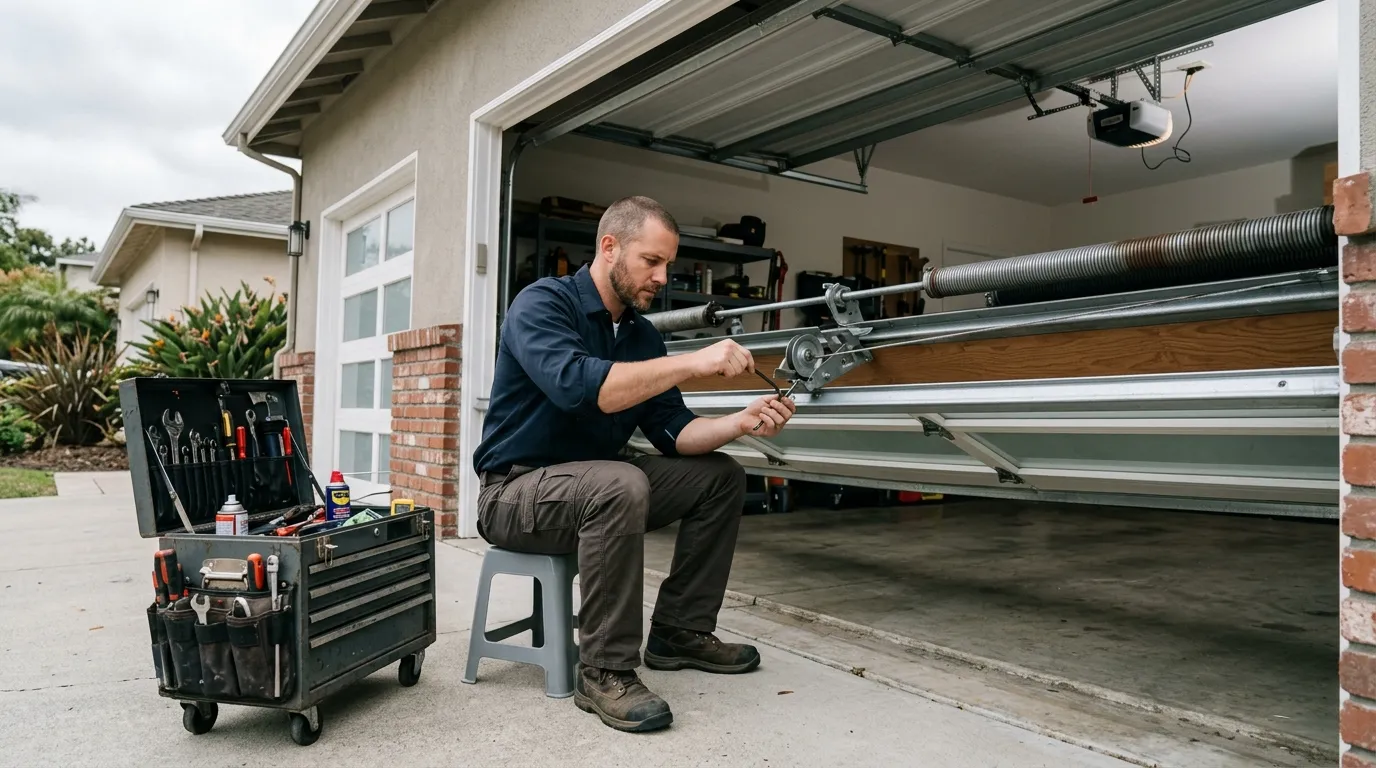
Garage Door Service
Tune-ups, lubrication, and safety checks that catch a small problem before it becomes a service call.
Learn more →Frequently Asked Questions
My garage door is slow to open only in winter - is that normal?
Cold-weather slowdown is common here given the climate band and doesn't always mean a broken part. Cold thickens grease on springs and rollers and metal contracts slightly, which can cause dragging or minor binding. Lubricate moving parts with a garage-door-rated lubricant first. If it's still slow after that, the spring tension may need adjusting for the temperature swing.
Is my old torsion spring still safe to leave alone?
If your house dates to the common 1960s-70s stock in this area and the spring has never been replaced, age alone is a reason to have it inspected rather than left. Springs don't show wear until they fail, often violently. We can't tell you it's fine without looking at it, and we won't guess over the phone.
Should I replace or repair a door from the 1970s?
It depends on what's failing. A worn roller or track on an older door is a repair. A door with rusted-through panels, warped track from age, or a spring rated for a different door weight than what's installed is usually a replacement call, since patching mismatched hardware from different eras rarely holds up long-term.
Have a Door That Needs a Second Opinion?
Call and describe what it is doing - we will tell you what it likely is.