Bolingbrook Garage Door Guide
What Actually Happens During a Service Call
A look at what a real service call handles for Bolingbrook homes built mostly in the 1960s-70s, plus what cold winters do to springs, tracks, and openers here.
- Licensed & Insured
- Same-Area Service Calls
- Upfront Pricing
When It Stops Being a DIY Job
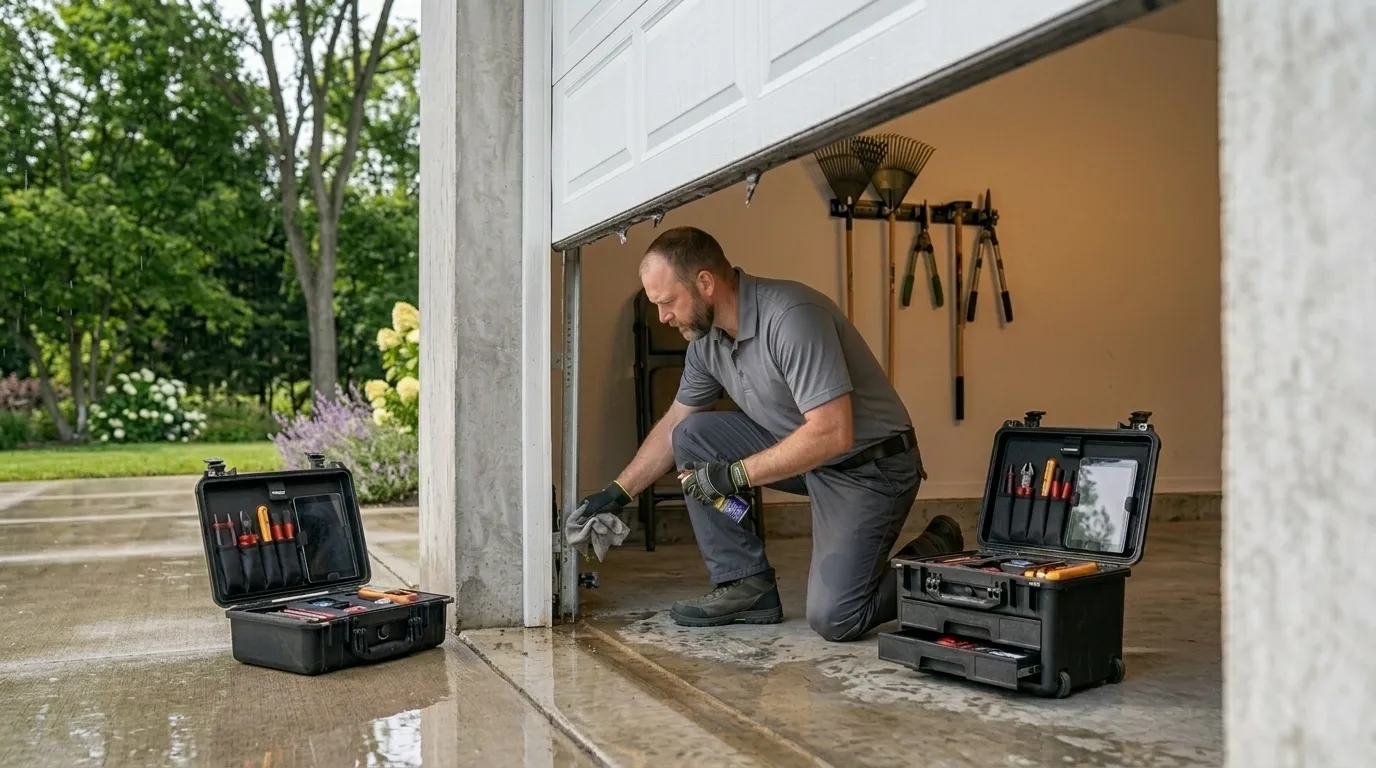
A lot of the doors we get called on around Bolingbrook were installed when the house was built, and with housing here running from 1938 up through 2004 with a median around 1976, that means a good chunk of the doors we see are original or close to it. Torsion springs from that era don't have model numbers printed anywhere useful, and the winding cones on older units aren't the same size as what's on the shelf at a home center. If you're swapping a bottom roller or tightening a loose bracket, that's fine to do yourself.
Once you're touching a torsion spring under tension, or the cable has jumped the drum, that's not a YouTube afternoon - that's a trip to the ER if it lets go wrong. We draw the line at anything spring-side or anything where the door is off its tracks. If you can lift the door by hand with the opener disconnected and it moves smooth and balanced, you can handle the small stuff.
If it's heavy on one side or drops fast, stop and call.
The Problem
The doors going bad right now aren't random - they cluster by build year. Houses from the 1960s and 70s stock that makes up most of this area are hitting the point where the original springs, worn from thousands of cycles, are at or past their rated life. Steel fatigues on a schedule, and a spring installed in 1975 has had a lot more winters than one installed in 2004.
We also see openers from the same generation - chain-drive units with worn gears and no auto-reverse sensors, which is a safety issue on top of a convenience one. The pattern isn't that Bolingbrook has bad luck with garage doors. It's that a big share of the stock is old enough that original hardware is simply wearing out at the same time, house by house, block by block.
When Waiting Is Fine
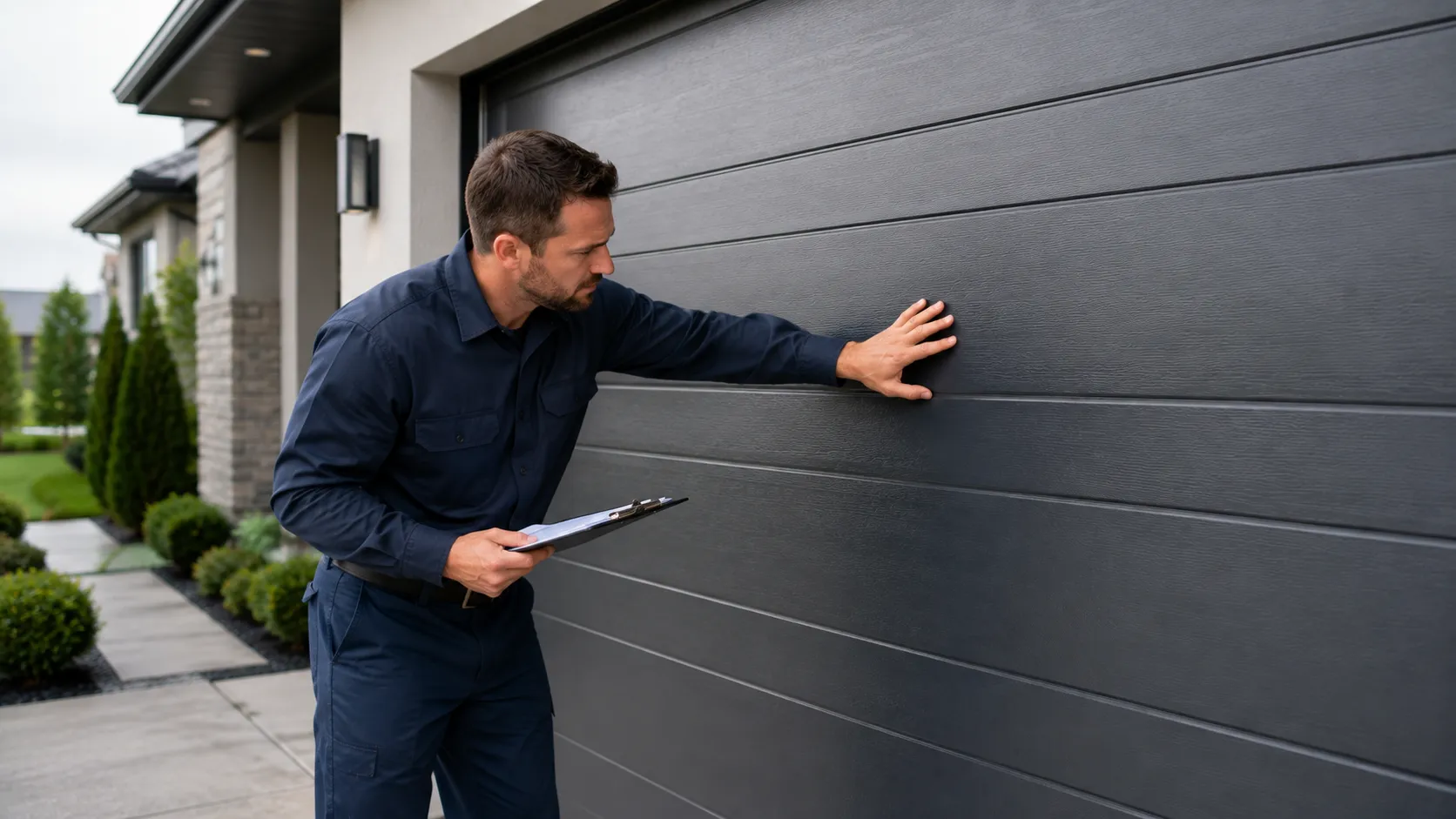
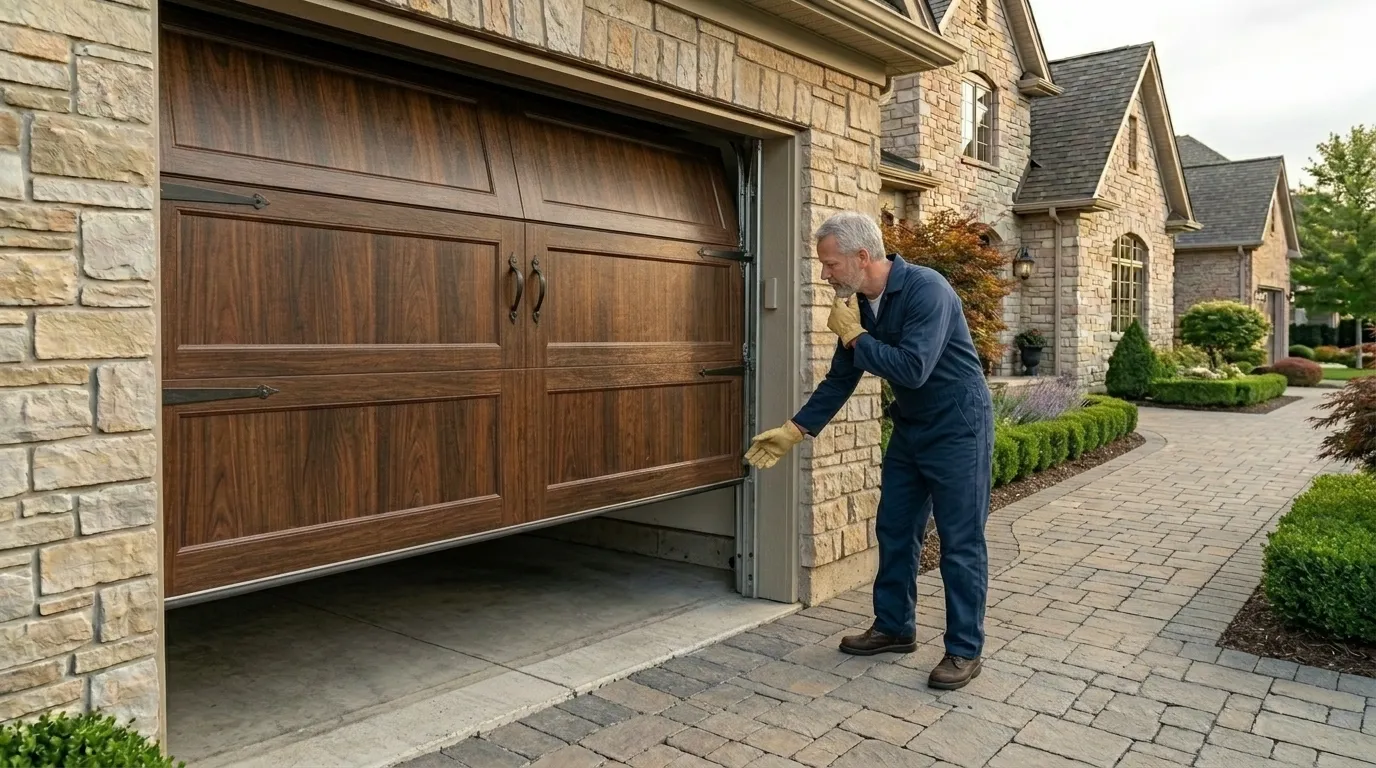
Not every noise means a service call today. A door that squeaks but opens and closes evenly, with no grinding or hesitation, can usually wait for a scheduled tune-up rather than an emergency visit. Cosmetic dents in a panel that don't affect the track alignment aren't urgent either - they're an appearance issue, not a function one.
If your opener light is out but the door itself works fine, that's a bulb, not a breakdown. We'd rather you wait and bundle a few small things into one visit than pay for a rush call on something that isn't actually broken. The one thing we won't tell you to wait on is a spring that's already snapped - once it's gone, the door isn't safe to run on the opener alone, full stop.
How Local Conditions Play In
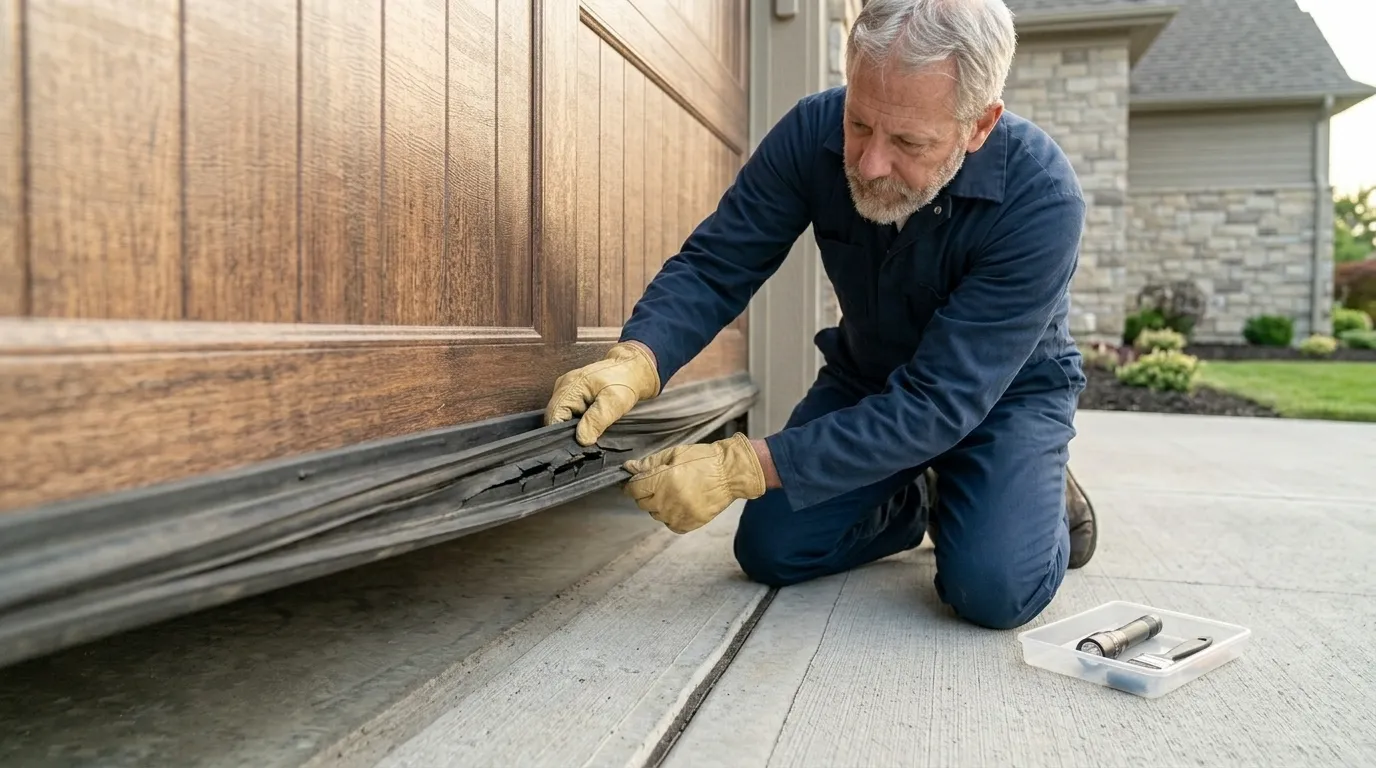
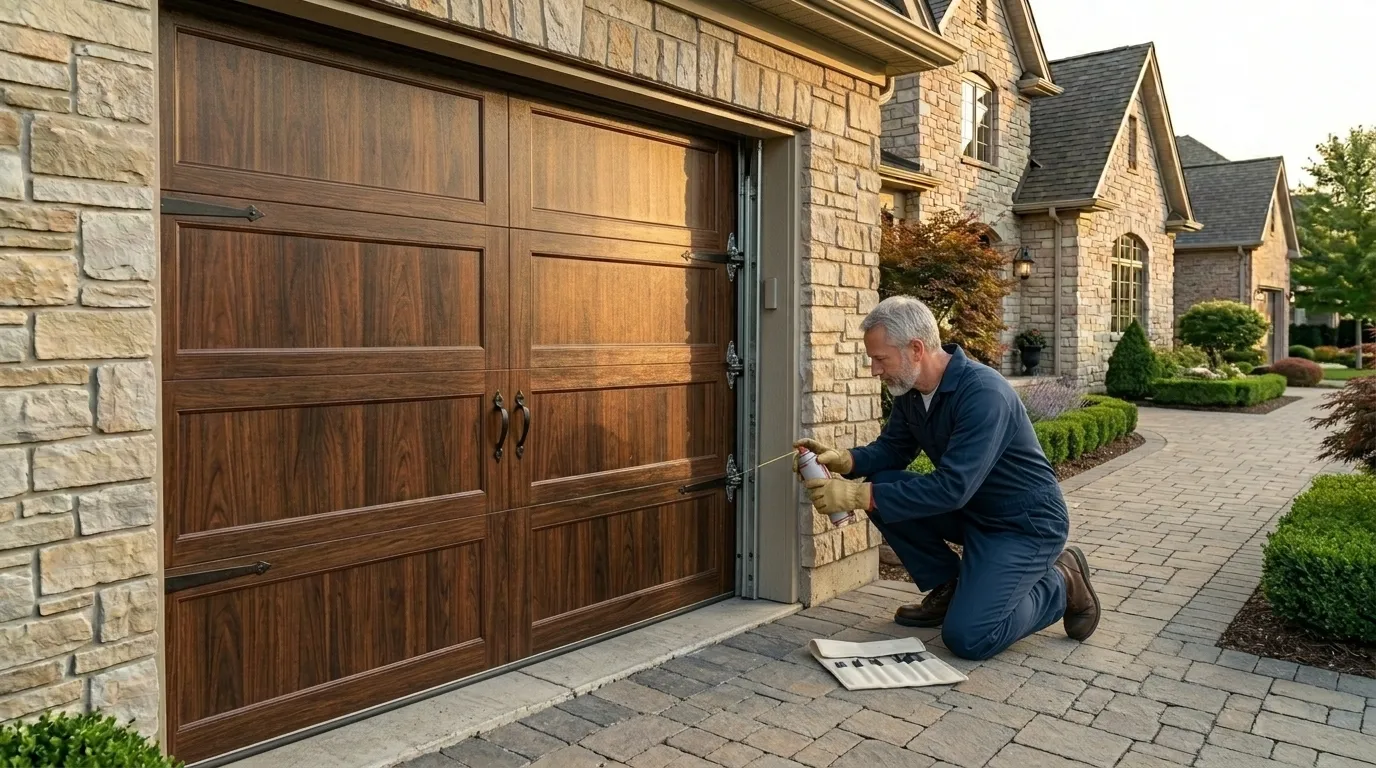
This is a cold moderate climate, and that matters more for garage doors than people expect. Steel springs lose some flex in hard cold and take more force to cycle, which speeds up wear on hardware that's already old. Lubricant on rollers and hinges thickens up too, so a door that was smooth in September can start binding once temperatures drop.
None of this is unique to any one street - it's a function of winters here being cold enough, consistently enough, to matter over a 20 or 30 year service life. Combine that with a housing stock where a lot of doors and openers date back to the 1960s-70s wave of construction, and you get a fairly predictable failure pattern: springs going in the coldest months, on doors installed decades before anyone thought about maintenance schedules.
How We Can Help
Garage Door Repair
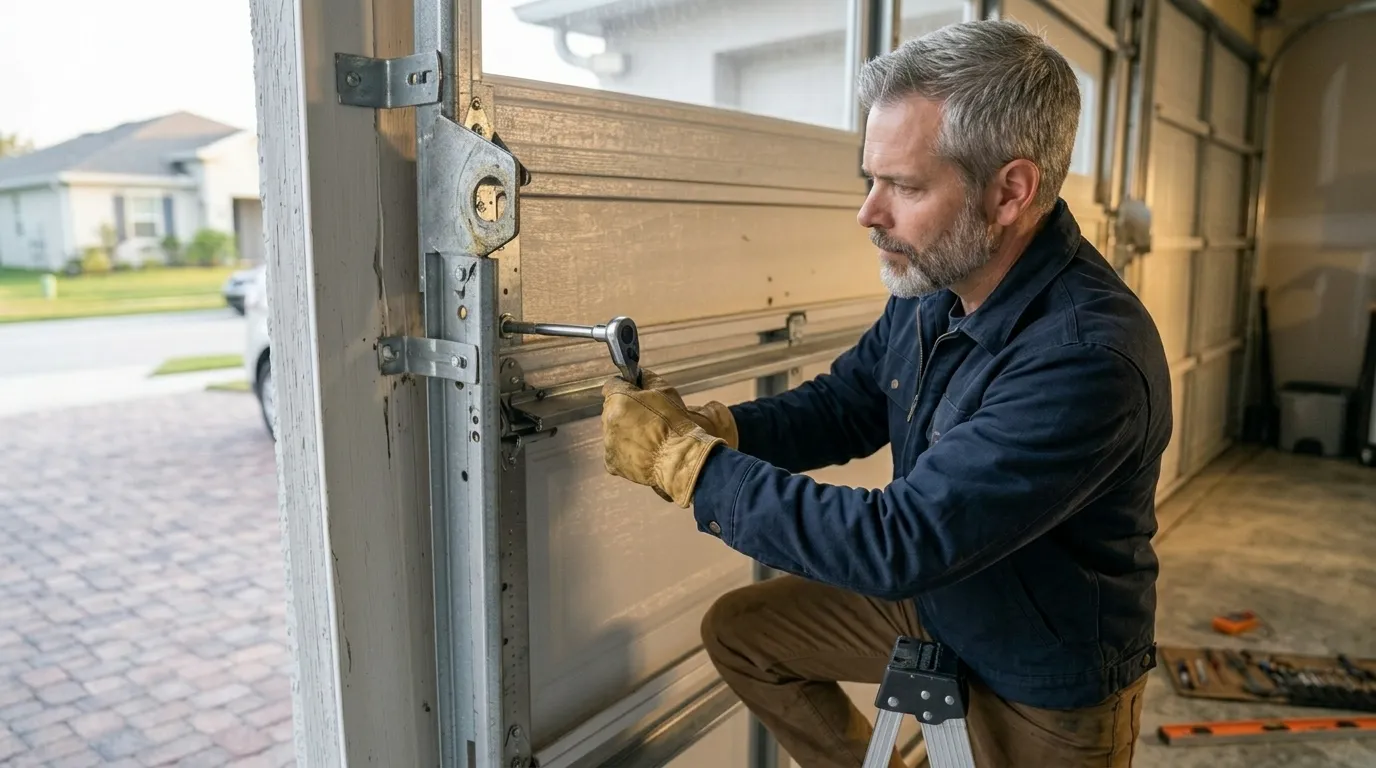
Springs, cables, tracks, rollers, and openers fixed by a tech who explains the problem before touching anything.
Learn more →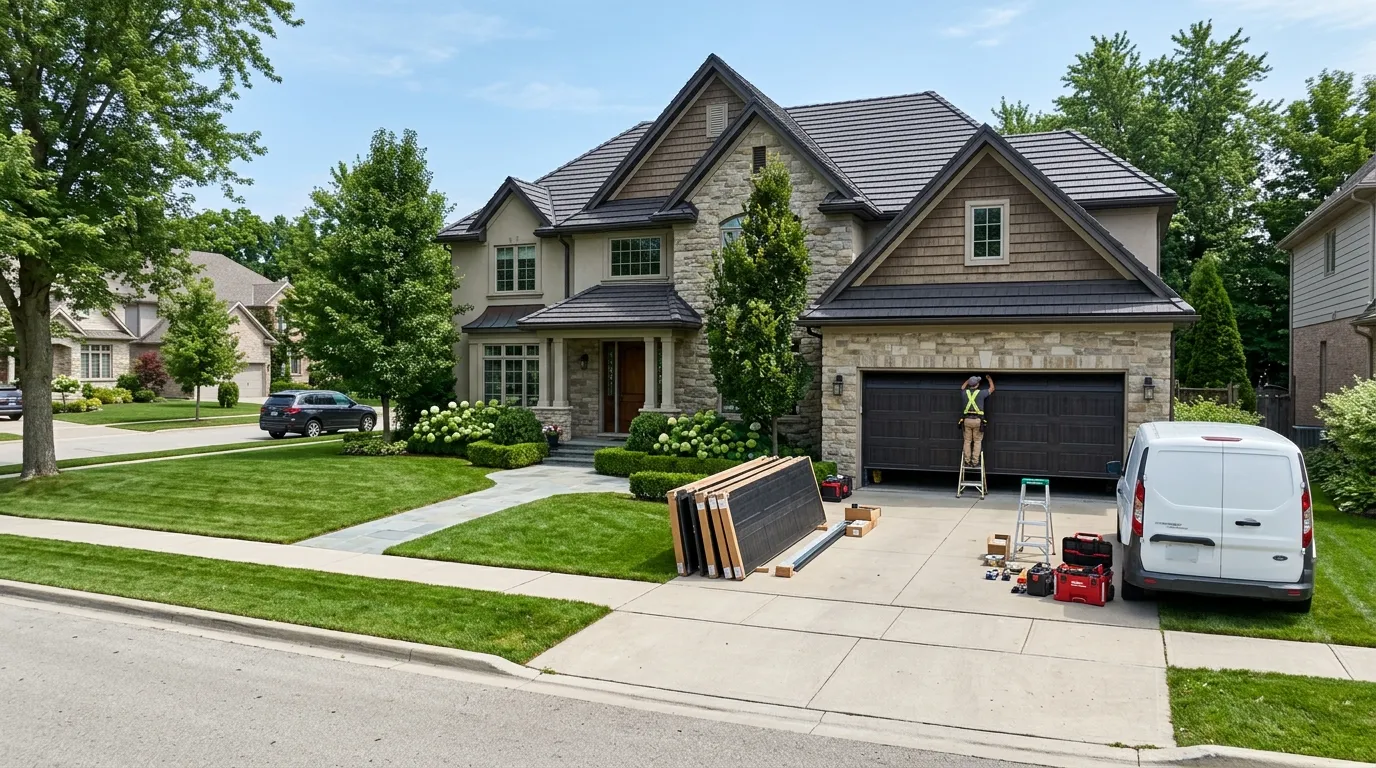
Garage Door Installation
New sectional doors sized and installed for the housing stock actually built in this area.
Learn more →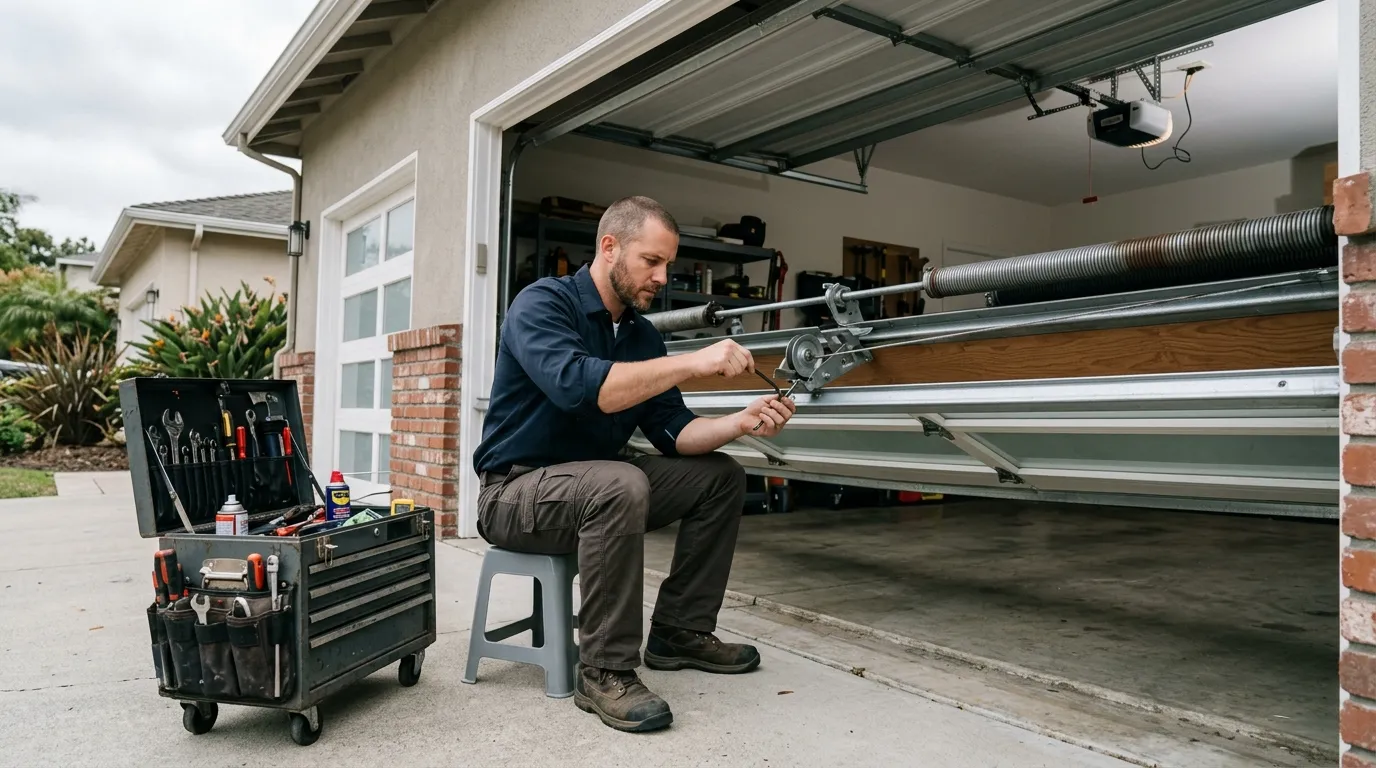
Garage Door Service
Tune-ups, lubrication, and safety checks that catch a small problem before it becomes a service call.
Learn more →Frequently Asked Questions
How do I know if my garage door spring is original to the house?
If your house was built in the 1960s or 70s, which covers a lot of homes in this area, and the spring has never been replaced that you know of, assume it's original. Original springs from that era are well past a normal service life and are a common reason for an emergency call in cold weather.
Can I just replace one spring on a two-spring door?
You can, but we don't recommend it. If one spring failed from age, the other one - installed the same day, cycled the same number of times - is close behind it. Replacing both at once costs less overall than two separate service calls.
Does cold weather actually break garage door springs?
Cold doesn't snap a spring by itself, but it stiffens the steel and thickens lubricant, which adds strain to a spring that's already near the end of its life. That's why we see more spring failures in the coldest months, especially on older hardware.
Have a Door That Needs a Second Opinion?
Call and describe what it is doing - we will tell you what it likely is.