Bolingbrook Garage Door Guide
What Wind Does to a Wide Garage Door in Bolingbrook
Bolingbrook's older wide doors and cold winters put real strain on tracks and panels. Here's what wind does to a wide door and when a repair call makes sense.
- Licensed & Insured
- Same-Area Service Calls
- Upfront Pricing
When It Stops Being a DIY Job
A lot of Bolingbrook's housing went up in the 1960s and 70s, with the broader build window running 1938 to 2004 and a median year around 1976. That era favored wide, single-panel or two-car doors on tracks that weren't engineered for the wind-load standards you'd see on a new build today. A gust that just rattles a newer, narrower door can flex an older wide panel enough to pop a roller out of its track or bow the panel itself.
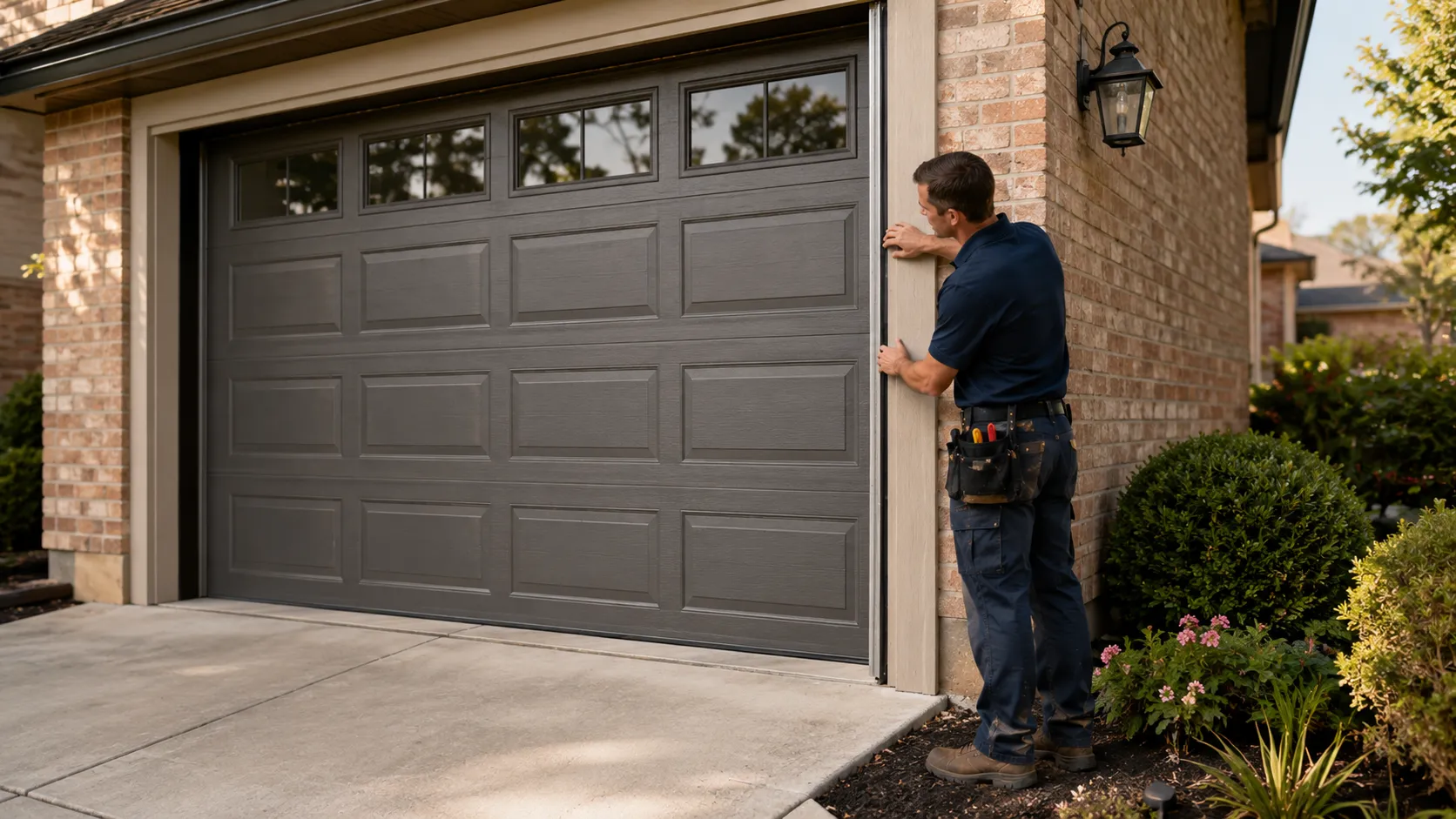
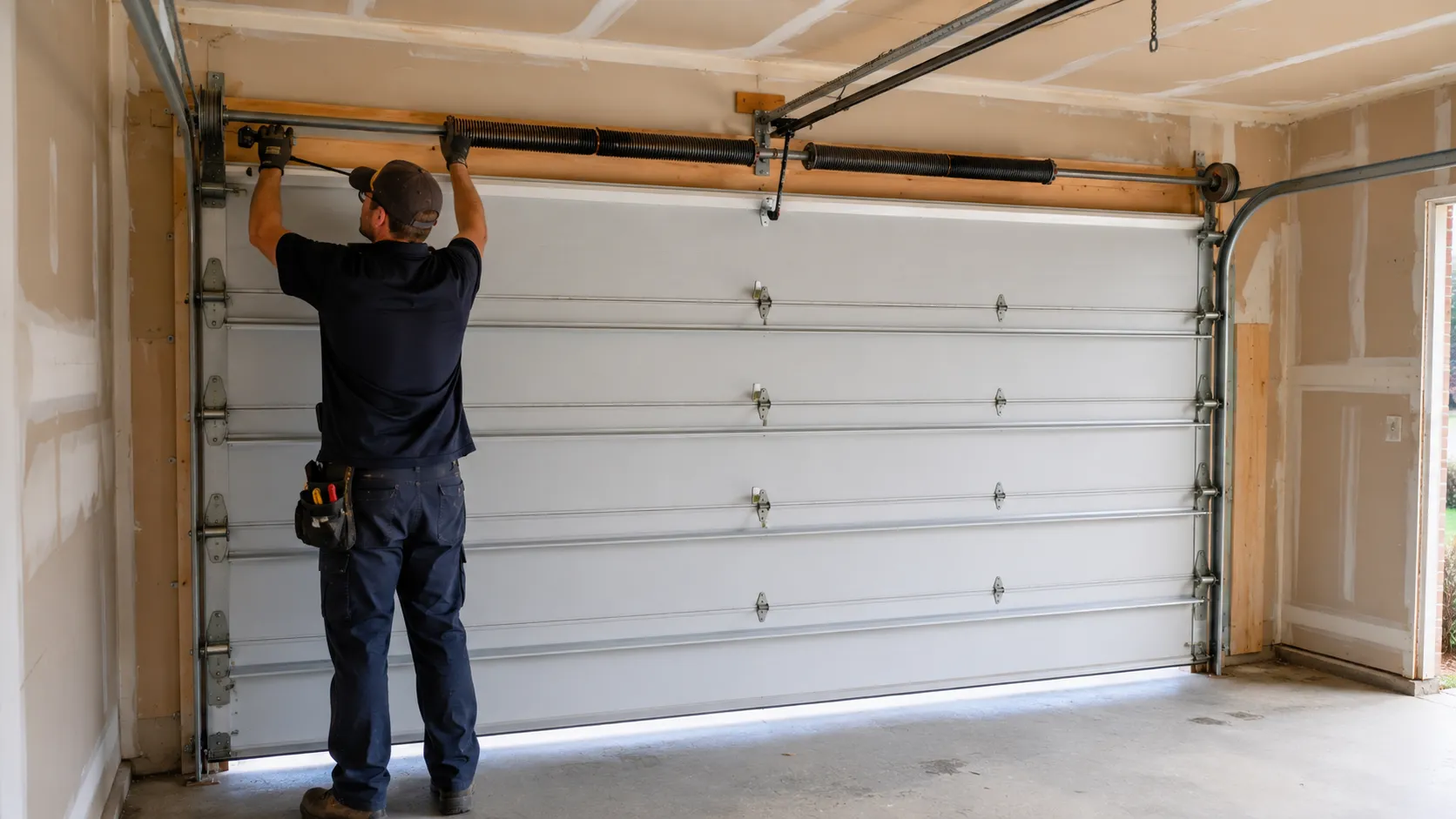
If your door is shaking in its frame during wind, or you see daylight flexing between the panel and the jamb when it gusts, that's not something to fix with a can of lubricant. A bowed panel on a wide door usually means the reinforcing strut behind it has already given way, and once that happens the door is carrying load it wasn't built to carry. Trying to force it up and down on a bad strut risks the cable jumping the drum, which is a different repair entirely and a more dangerous one.
Same goes for a track that's pulled away from the wall on one side. On a wide door, one side pulling loose puts twisting force on the whole opener rail. That's a call, not a weekend project.
The Problem
Wide doors move more air than narrow ones. A standard two-car door has roughly twice the surface area of a single door catching the same gust, and older housing stock in Bolingbrook - built well before current wind-load requirements existed - often has doors with thinner steel and fewer struts than what's installed today. The result is more flex per gust, and flex fatigues hardware.
The part that fails first is usually the track, not the door skin. Repeated flexing walks the rollers toward the edge of the track over months, not one storm.
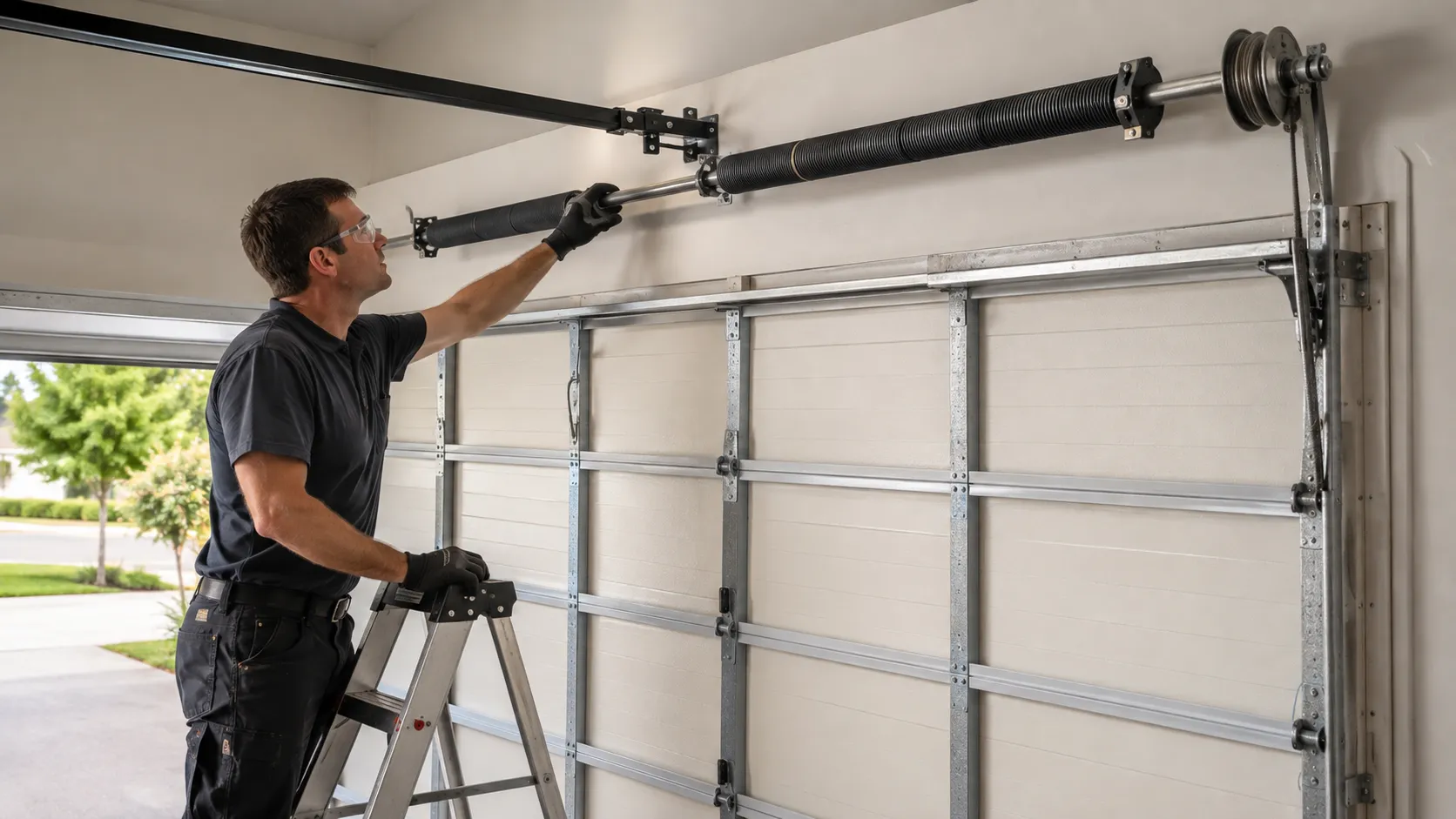
By the time you notice the door running crooked or scraping one side of the frame, the track has probably already been bent slightly out of true. On a wide door that's carrying an extra-long torsion spring setup, a track out of alignment also throws off spring tension, which is where things get genuinely unsafe to touch yourself.
Cold makes it worse, not because cold bends steel on its own, but because a cold, stiff door under wind load has less give in the seals and weatherstripping that would otherwise absorb some of that movement. Stiff plus flexed is how a strut cracks instead of just bowing back.

When Waiting Is Fine
Not every windy day means a call. If your door is newer, sits flush and quiet when the wind picks up, and the track shows no gap at the wall brackets, you can leave it alone. A door that rattles a little in its weatherstripping but tracks straight and closes flush isn't in danger - that's just an old door being an old door.
We'll also say plainly: if the only symptom is noise, and the door still opens, closes, and locks square, that's a maintenance visit, not an emergency. We'd rather tell you to wait a season and get it looked at during a slow week than run out same-day for something that isn't urgent. Emergency calls exist for jobs where a spring or cable has already failed, or a panel is visibly bowing under load - not for a door that's simply loud.
How Local Conditions Play In
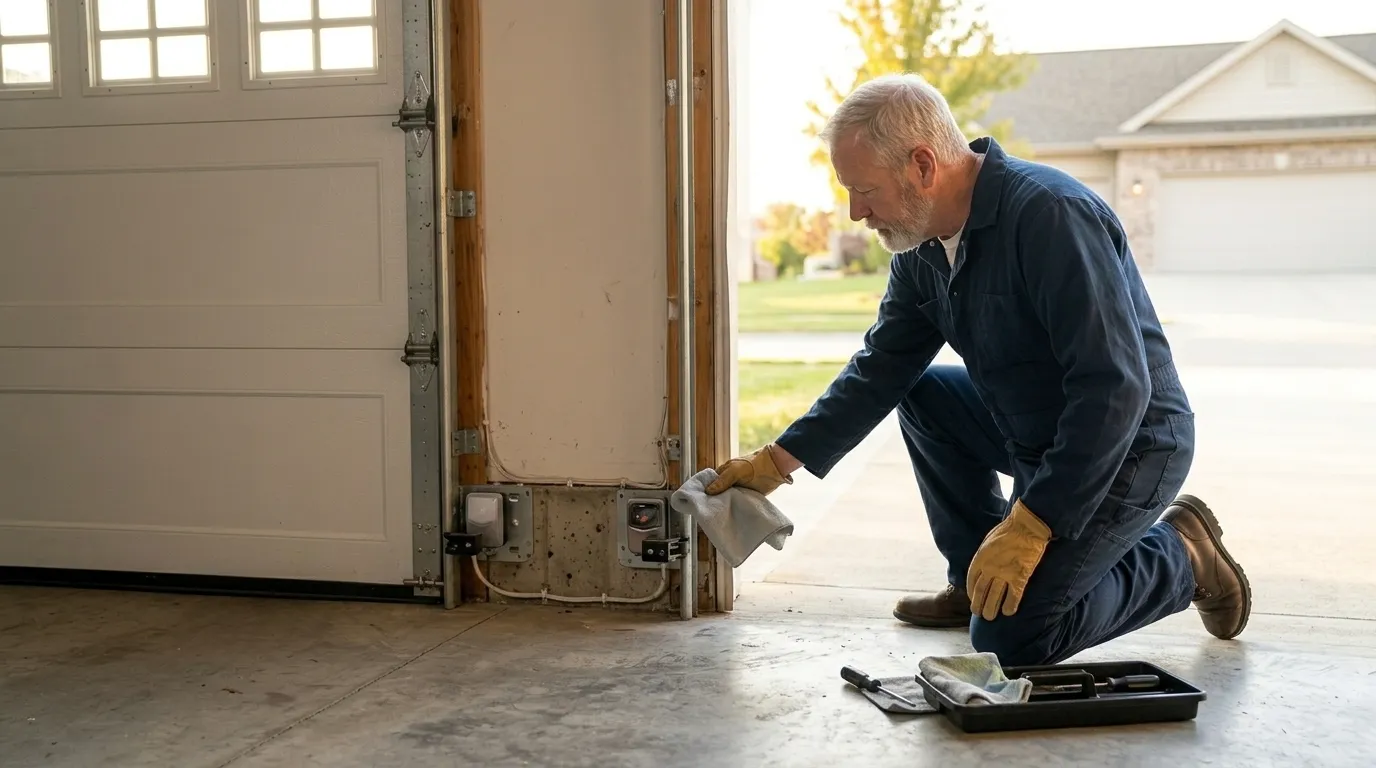
Bolingbrook sits in a cold, moderate climate band, which means the door hardware goes through real freeze-thaw cycling every winter, not just occasional cold snaps. Metal contracts in the cold, seals stiffen, and a track that had a quarter inch of play in October can tighten up unevenly by January. Add wind load on top of that seasonal tightening and a wide door that was fine in fall can start binding or flexing differently in winter.
This matters more for the wide, two-car doors common on the older side of Bolingbrook's housing stock, since a longer torsion spring and longer track have more length to move out of alignment when cold and wind act on it together. A narrower single door on the same street usually rides out the same gust with less drama, simply because there's less panel to catch the wind.
If you're not sure which category your door falls into, the giveaway is usually age and width together: an older, wide double door is the one worth a seasonal look before the worst of winter wind sets in, not after.
How We Can Help
Garage Door Repair
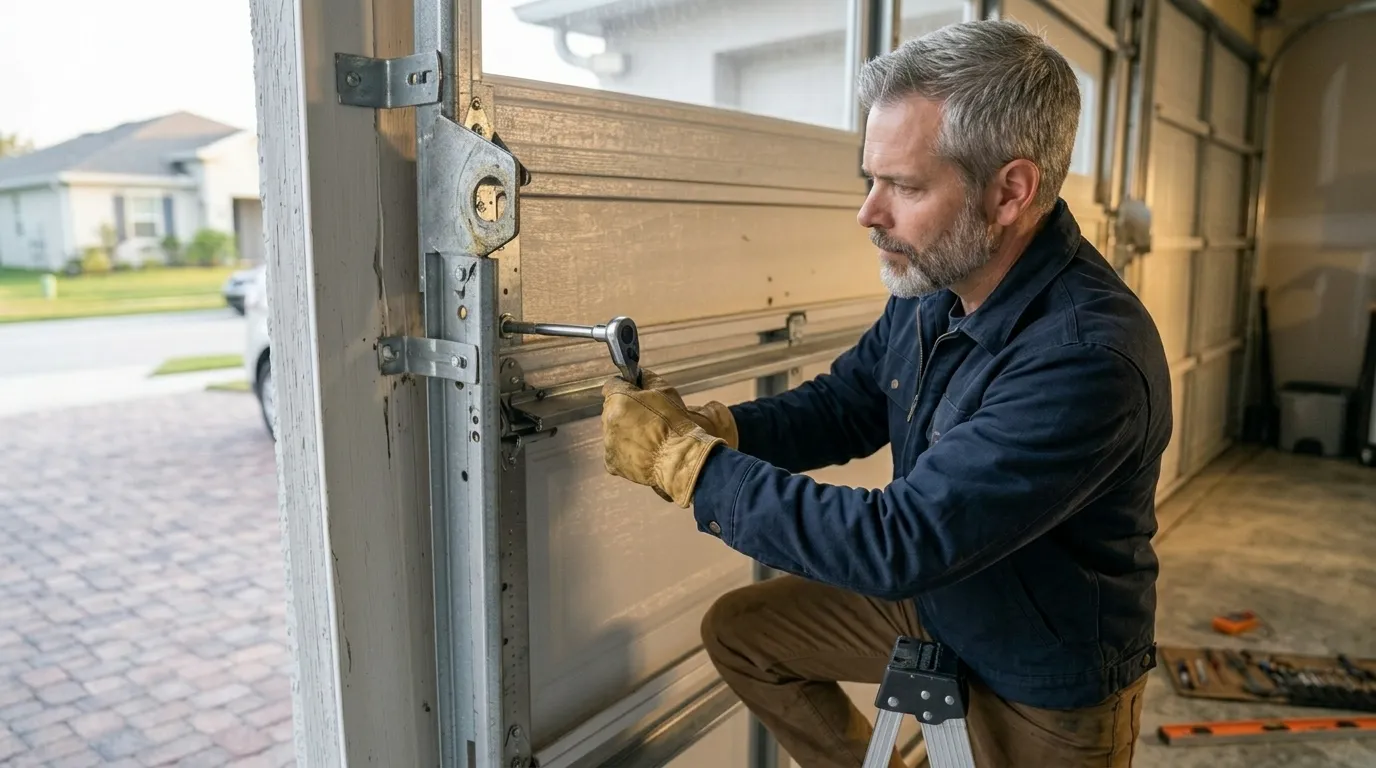
Springs, cables, tracks, rollers, and openers fixed by a tech who explains the problem before touching anything.
Learn more →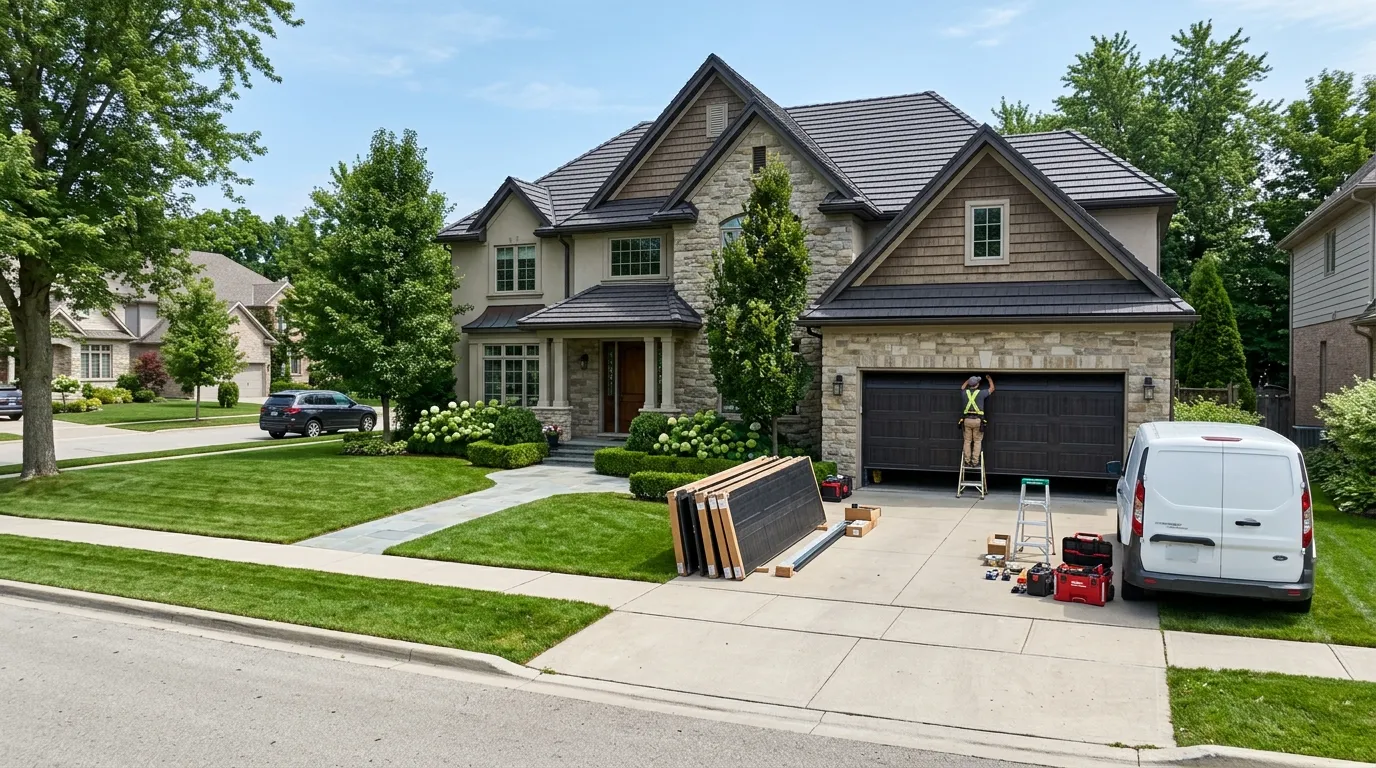
Garage Door Installation
New sectional doors sized and installed for the housing stock actually built in this area.
Learn more →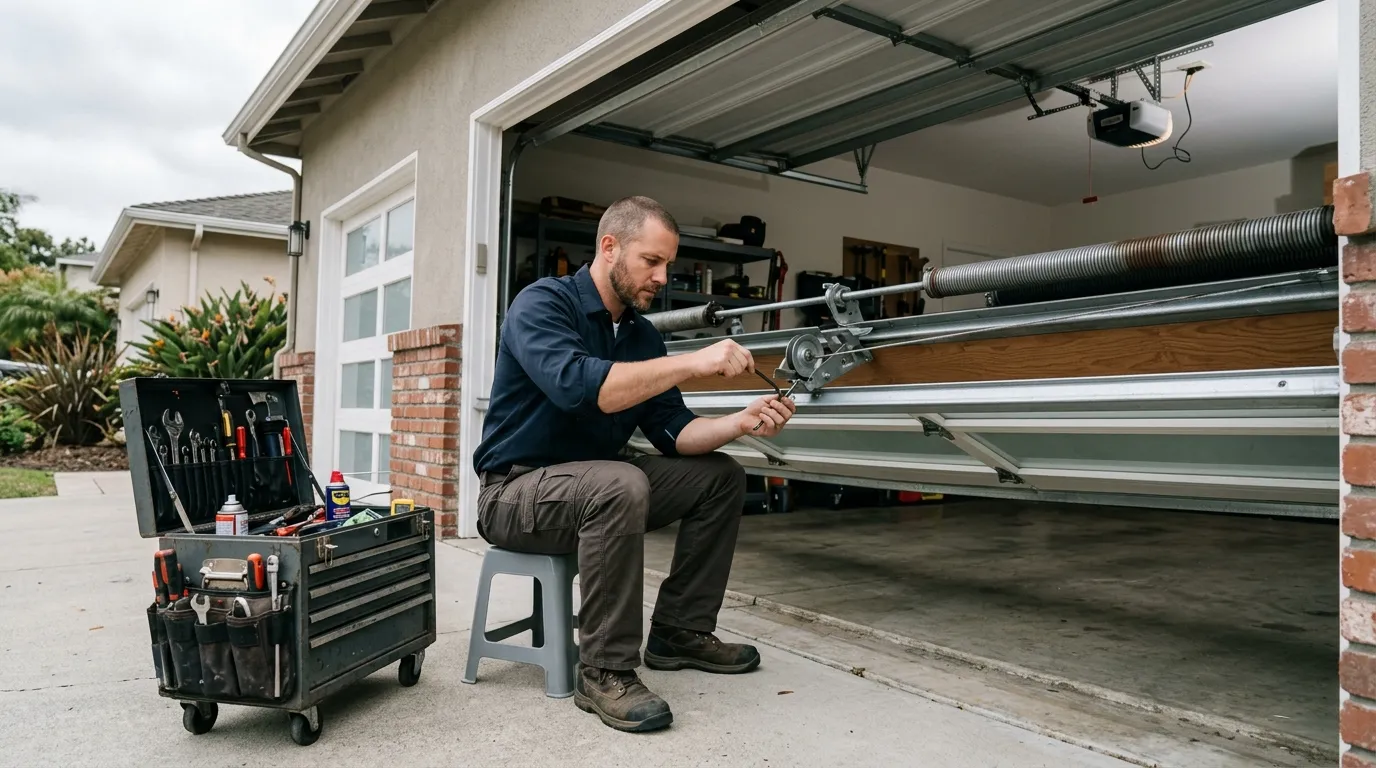
Garage Door Service
Tune-ups, lubrication, and safety checks that catch a small problem before it becomes a service call.
Learn more →Frequently Asked Questions
Why does my garage door shake more in wind than my neighbor's newer door?
Wide, older doors common in Bolingbrook's 1960s-70s housing stock catch more wind and were built to lighter standards than current code. A newer door of the same width usually has heavier steel and more internal struts, so it flexes less under the same gust.
Is a rattling door in high wind an emergency?
Not by itself. If it still opens, closes, and sits flush in the frame, that's noise, not failure. Call right away if you see the panel bowing, a track pulling from the wall, or a spring or cable that's already let go.
Does cold weather make wind damage worse?
Yes. Cold stiffens seals and tightens hardware tolerances, so a track with slight play in fall can bind differently by winter. Combined with wind load on a wide door, that's when a marginal track finally gives out.
Have a Door That Needs a Second Opinion?
Call and describe what it is doing - we will tell you what it likely is.