Nearby Community
Garage Door Work for Hometown's 1955-Era Housing
Hometown's houses mostly date to 1955, a decade or more older than the surrounding area. We travel from Bolingbrook to work on the springs, tracks, and openers that come with that older stock.
- Licensed & Insured
- Same-Area Service Calls
- Upfront Pricing
What Was Built Here
Hometown's houses run older than most of the towns we cover out of Bolingbrook. The median build year here is 1955, while the broader service area centers closer to 1976. That's not a small gap - it's most of a generation of hardware and door design between what's typical here and what's typical a few miles over.
With about 1,916 households in Hometown, this is a small, tight area, and a lot of those homes still carry their original garage structure even where the door itself has been swapped out once or twice over the decades. Framing, headroom, and track clearance were all built to 1950s dimensions, which matters more than most homeowners realize when it comes time to size a new door or opener.
Median household income here runs $59,265, noticeably below the wider service area's $98,891. That gap shows up in how people approach repairs - more patch-and-extend, fewer full teardown replacements, and a real preference for fixing the part that broke instead of replacing the whole unit.
We work with that. A repair that's done right can carry an older door another decade without pretending the house is newer than it is.
What Neighbours Usually Call About
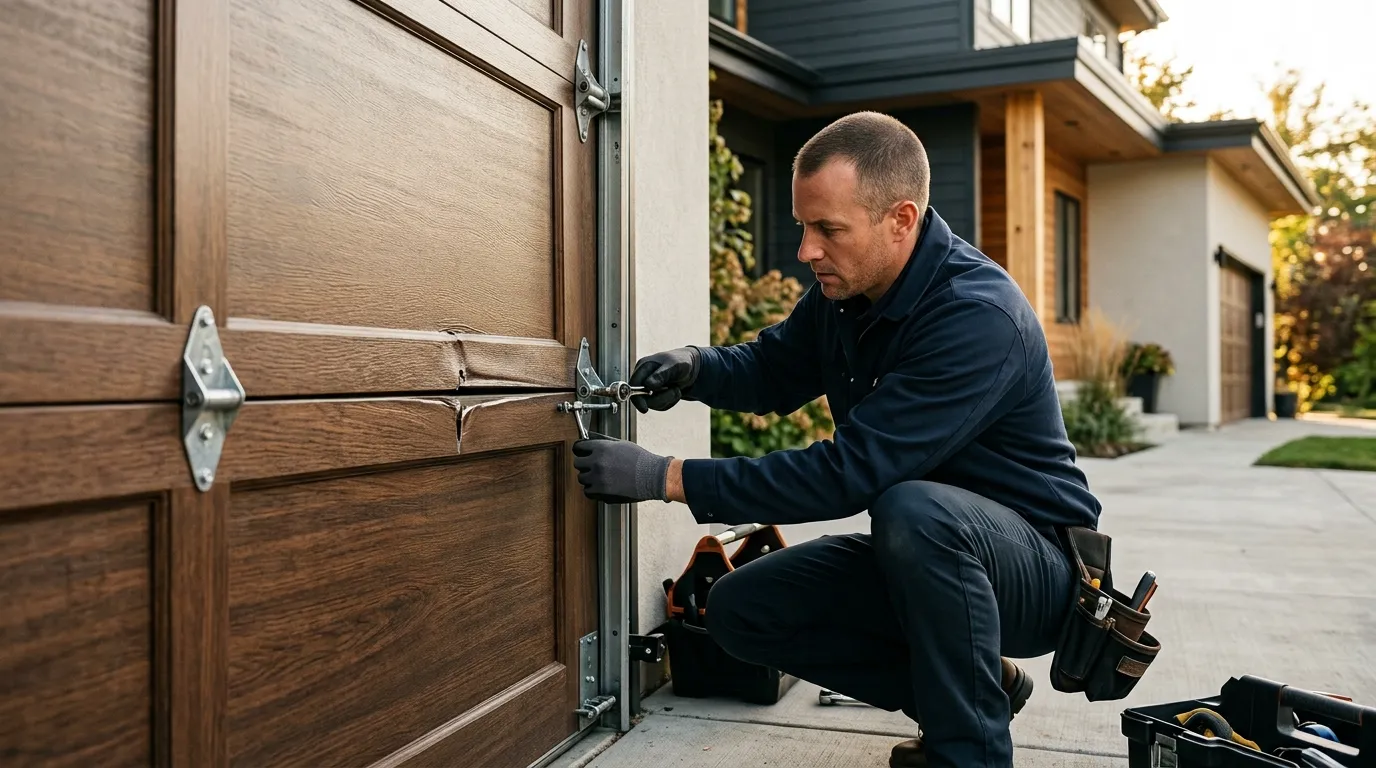
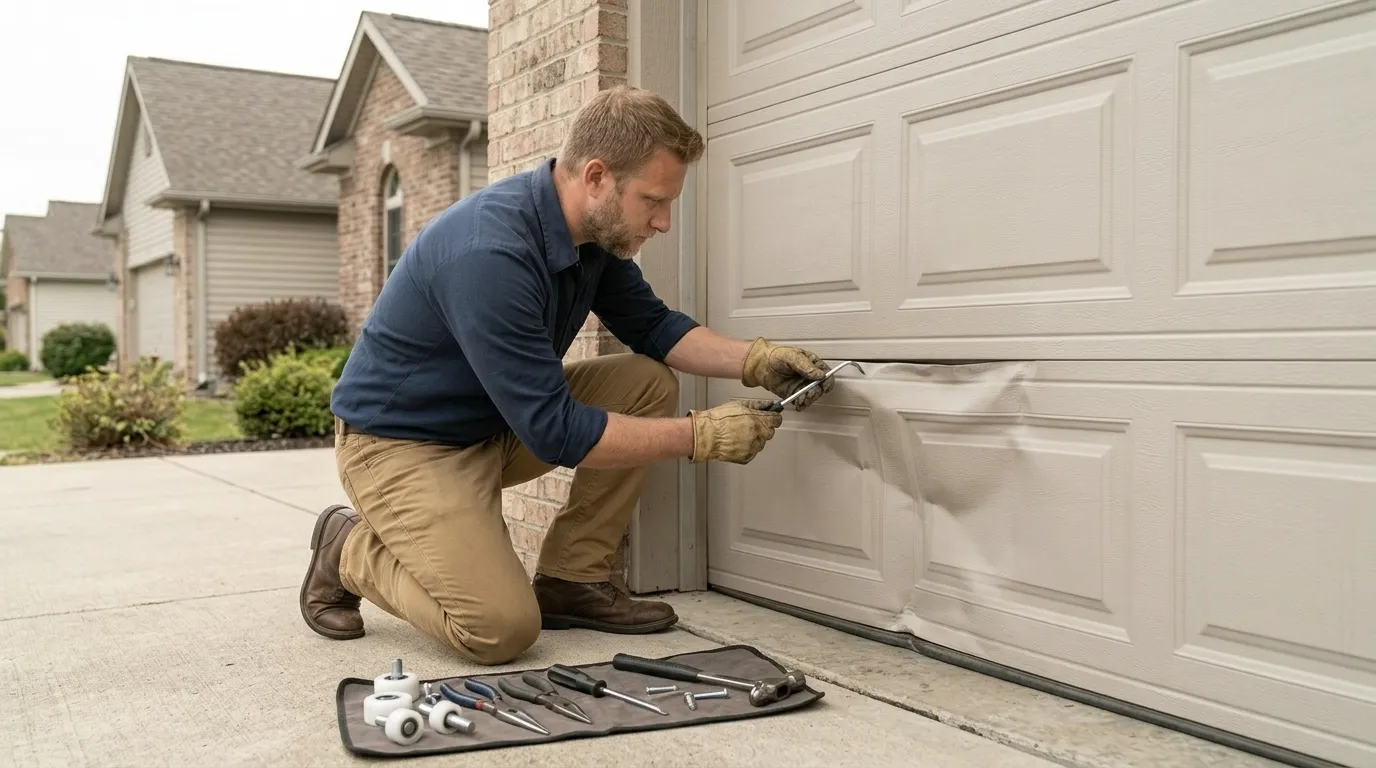
Doors from the 1950s were built for a different opener era - lighter panels, narrower tracks, and spring systems sized for less weight than today's insulated steel doors. When a Hometown homeowner has replaced the door but not the track or spring assembly, the mismatch shows up as noise, drift, or a door that won't sit flush at the bottom.
We also hear about openers straining on original wood-frame doors that have gotten heavier with age - sagging panels, added insulation, extra hardware - without anyone upgrading the spring tension to match. That's a straightforward fix once someone looks at it, but it's a different diagnosis than what you'd see on a door built to current specs.
Cold-weather stiffness is part of the call list too. In this climate band, older steel tracks that have collected decades of rust and paint buildup bind up hard once temperatures drop, and a door that was merely slow in October can stop moving entirely in January.
None of this is exotic. It's just what happens when 1950s bones carry newer parts that were never quite sized for them.
How That Shows Up in the Door
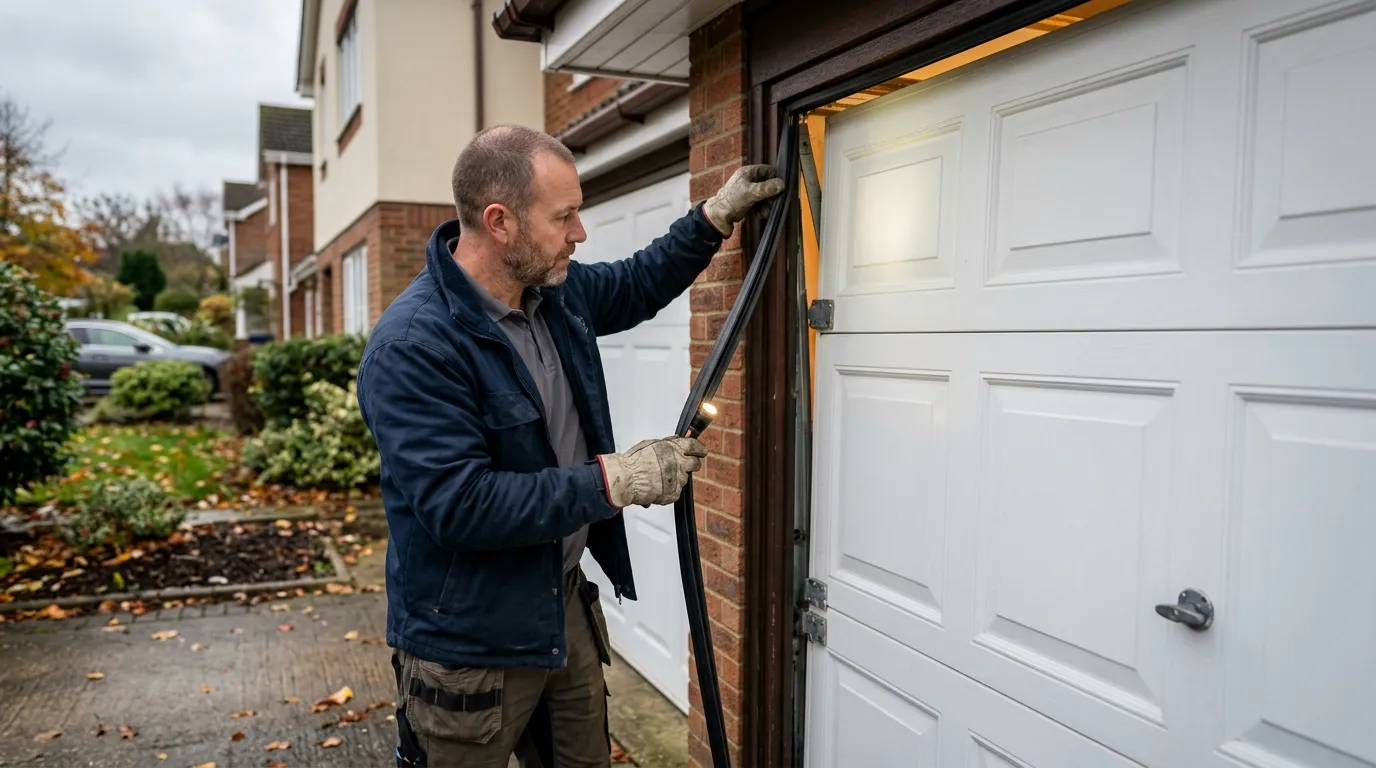
On a house built in 1955, the garage opening itself is often narrower and shorter than what later decades standardized on. That means a straightforward off-the-shelf replacement door sometimes needs trim work at the jamb, or a custom width, rather than a drop-in swap - something we flag before we quote the job, not after.
Track geometry is the other recurring issue. Older detached garages in this vintage frequently used low-headroom track configurations that later fell out of favor, and those setups need specific hardware that isn't what a standard big-box door kit includes. Get the track wrong and the door binds at the top of its travel every single time, which owners usually describe as the door
Recent Work Near Hometown
How We Can Help
Garage Door Repair
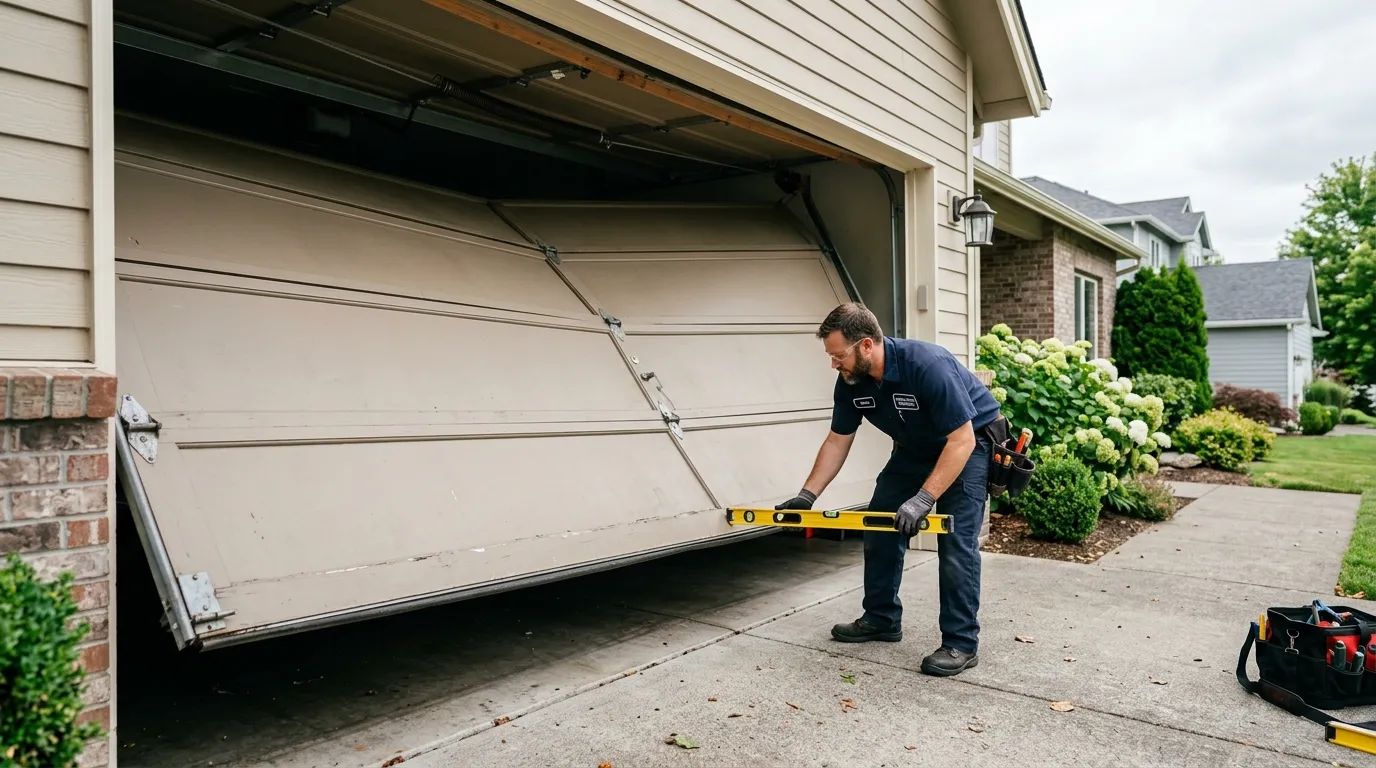
Springs, cables, tracks, rollers, and openers fixed by a tech who explains the problem before touching anything.
Learn more →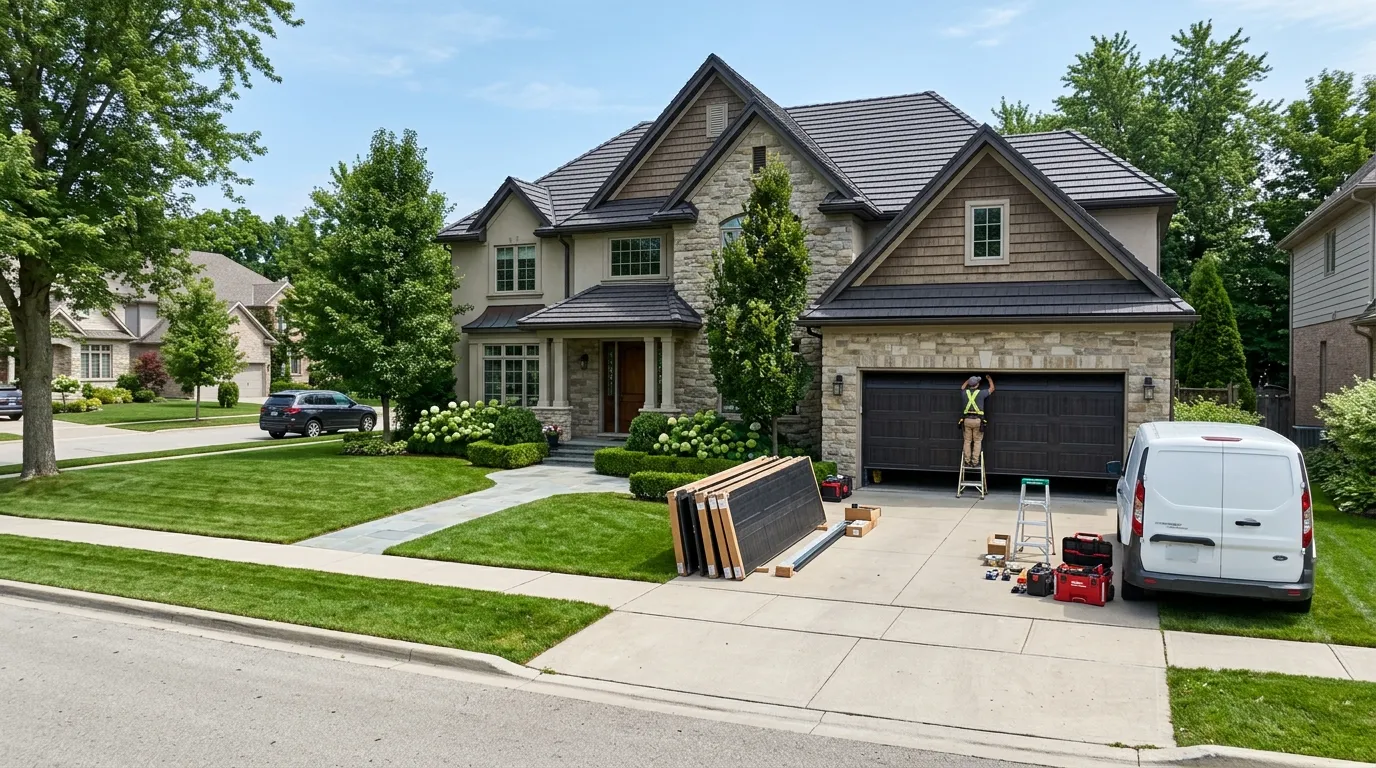
Garage Door Installation
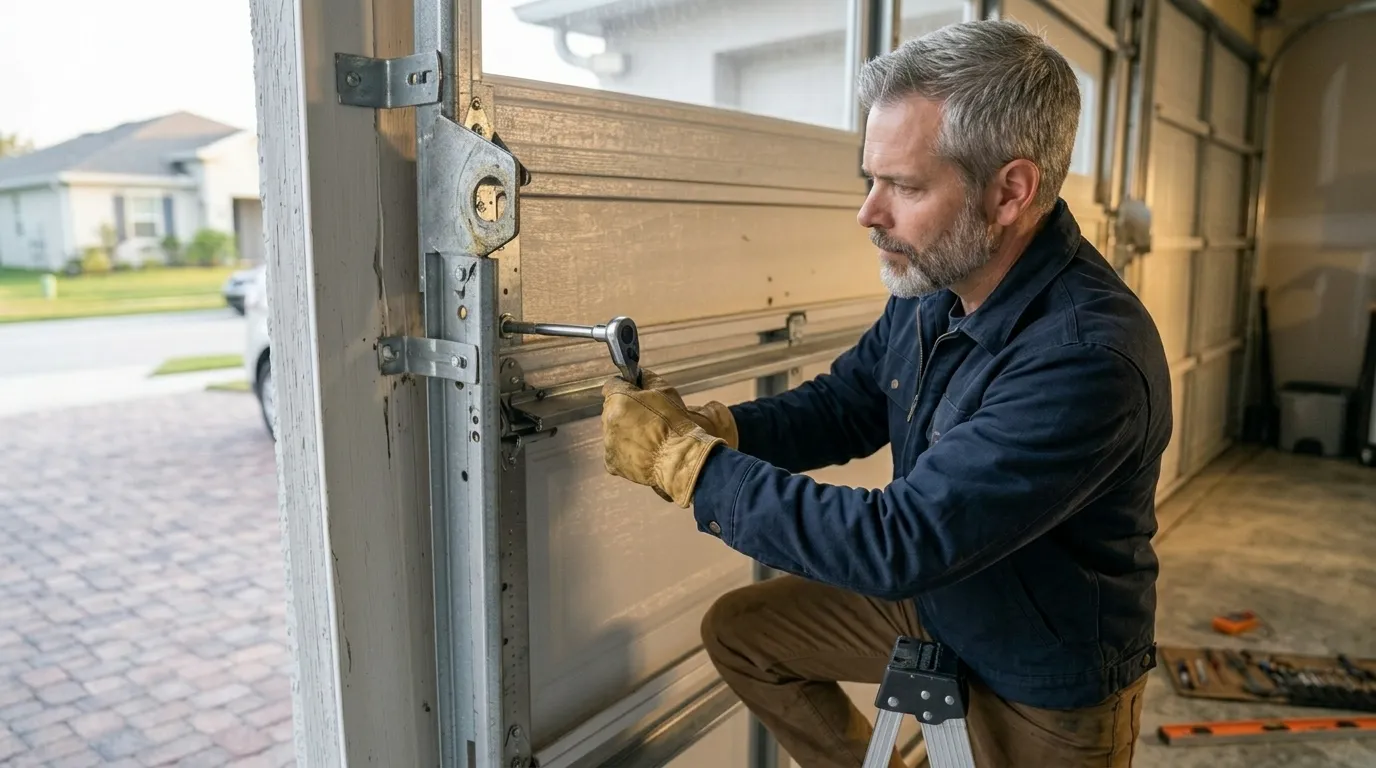
New sectional doors sized and installed for the housing stock actually built in this area.
Learn more →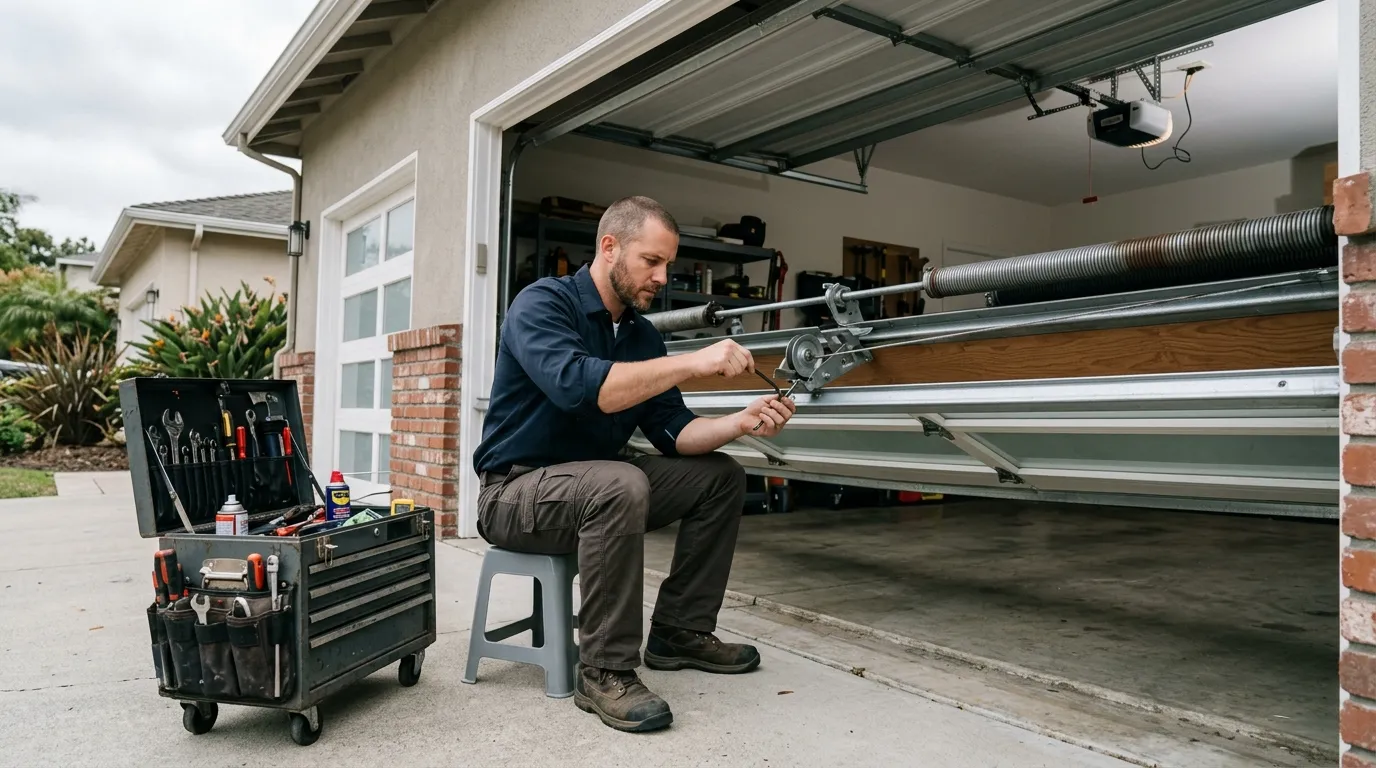
Garage Door Service
Tune-ups, lubrication, and safety checks that catch a small problem before it becomes a service call.
Learn more →What Happens When You Call
Call or Request a Quote
Tell us what the door is doing and roughly how old the house is - that alone points us toward the likely part before a truck leaves.
On-Site Diagnosis
A tech checks the spring, cables, tracks, and opener in person and tells you plainly what is actually wrong.
Straight Price, No Surprises
You get a number before any work starts. It covers parts and labor, nothing added after the fact.
Fixed the Same Visit
Most repairs are done in one trip. If a part needs sourcing, we tell you that upfront instead of guessing.
Frequently Asked Questions
Why does my garage door bind at the top only in winter?
On older tracks common in Hometown's 1955-era garages, decades of rust and paint buildup narrow the track channel just enough that cold-stiffened rollers catch near the top of travel. It usually reads as a track or roller problem, not a spring problem, and it gets worse as temperatures drop through the cold season here.
Can you just replace my door without touching the opener?
Sometimes, but on houses this age we check the opener's lift capacity against the new door's weight first. A heavier insulated door on an opener sized for a lighter 1950s-era panel will strain and wear out early, so we'll tell you upfront if the opener needs attention too.
Do you have a shop or crew based in Hometown?
No. We run out of Bolingbrook, about 19 miles away, and travel out for scheduled jobs. We don't claim a local depot or a guaranteed response window here - we're upfront that this is a drive-out service area, not a home base.
Is it worth repairing an original door instead of replacing it?
Often yes, especially given typical household budgets in Hometown. If the frame and track are sound, a spring or roller repair can extend an older door's life for a fraction of replacement cost. We'll tell you plainly when a door's past that point instead of running you through a repair that won't hold.
Get Your Door Fixed in Hometown
Call now for same-area service.